logo.webp

Welcome To Dawaa Dost

Enter your mobile number to continue

You want to Leave?

  • Home
  • Blog
  • Upper-Arm vs Wrist BP Monitor: Which One Should You Choose?

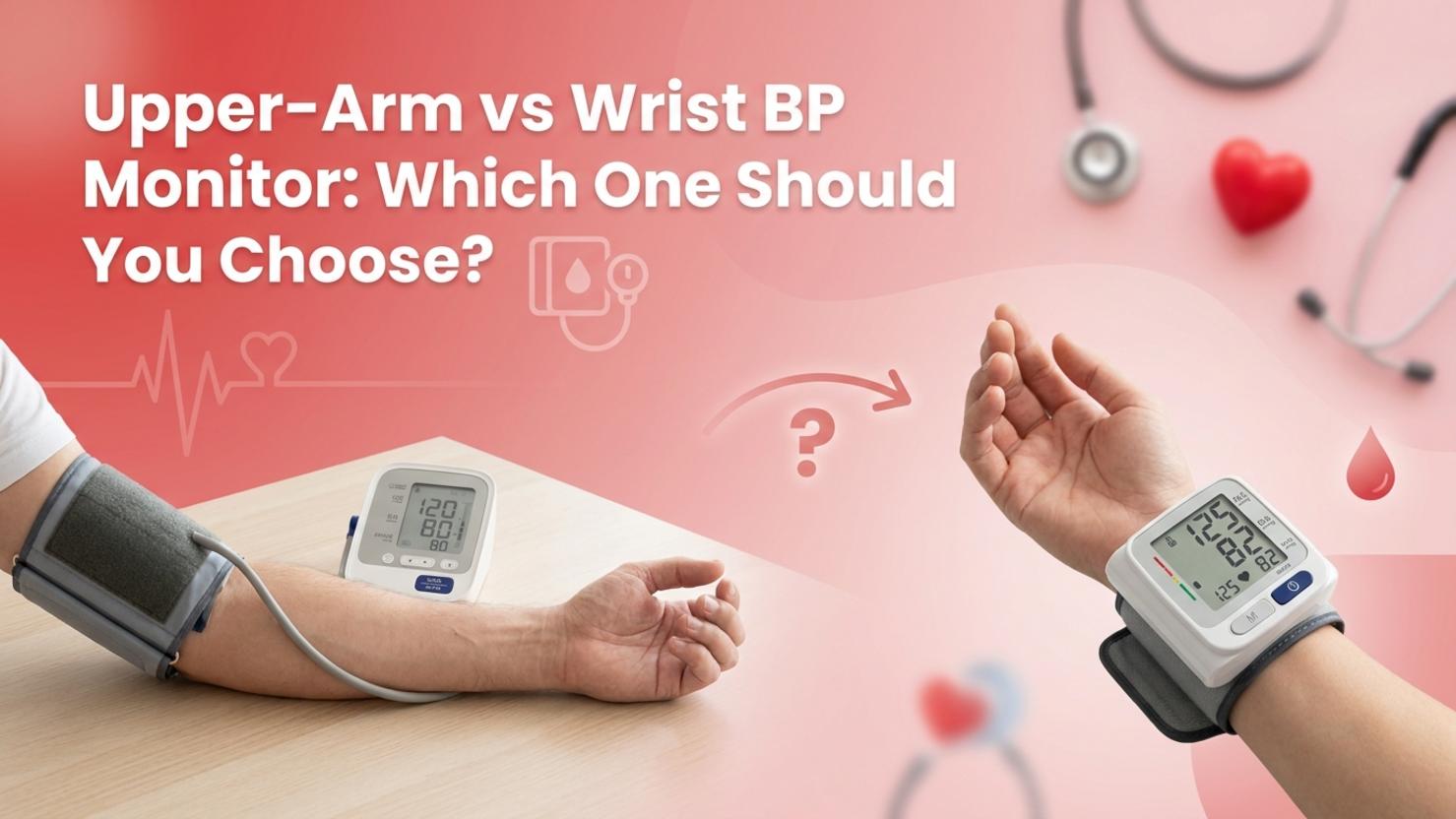
Upper-Arm vs Wrist BP Monitor: Which One Should You Choose?

3 min read
In this blog

  • Introduction
  • Understanding Blood Pressure Monitoring
  • What is an Upper-Arm BP Monitor?
  • What is a Wrist BP Monitor?
  • Accuracy: Upper-Arm vs Wrist BP Monitor
  • Convenience and Portability
  • Situations Where a Wrist BP Monitor Is Beneficial
  • Features to Look for in a Wrist BP Monitor
  • How to Ensure Accurate Results with a Wrist BP Monitor
  • The Role of Oscillometric Technology
  • Comparing Cost and Value
  • When to Consult Your Doctor
  • Conclusion
  • Frequently Asked Questions

Introduction

High blood pressure (hypertension) is a common health concern worldwide and a leading risk factor for heart disease and stroke. Regularly checking your blood pressure at home has become essential for accurate monitoring and effective management. However, when it comes to choosing a device, many wonder whether an upper-arm or wrist blood pressure (BP) monitor offers the most reliable and convenient results. One notable product in this market is the Dr Morepen BP 15 Blood Pressure Monitor, which uses advanced Oscillometric Technology for easy and accurate readings. In this article, you'll find clear guidance to help you make an informed choice based on your individual needs.

Understanding Blood Pressure Monitoring

Monitoring your blood pressure at home is a proven way to keep hypertension in check. Home BP monitoring helps in tracking your readings regularly, alerts you of sudden changes, and empowers you to have more productive discussions with your healthcare provider. There are mainly two options for at-home use: upper-arm and wrist BP monitors. But what sets them apart, and which one aligns best with your health goals?

What is an Upper-Arm BP Monitor?

Upper-arm BP monitors are widely recommended by healthcare professionals. These devices feature a cuff that wraps around your upper arm, usually just above the elbow. When activated, the cuff inflates and uses Oscillometric Technology to measure systolic and diastolic blood pressure values. These devices are known for providing consistent and clinically accurate results, making them the preferred choice among medical experts.

What is a Wrist BP Monitor?

Wrist BP monitors, as the name suggests, are worn on the wrist, much like a watch. The cuff wraps around your wrist and uses the same Oscillometric Technology to detect blood pressure. Devices like the Dr Morepen BP 15 Blood Pressure Monitor use advanced sensors to ensure comfortable and rapid readings, making home monitoring easier for users who prefer portability or have difficulty using upper-arm cuffs.

Accuracy: Upper-Arm vs Wrist BP Monitor

Accuracy is the cornerstone of blood pressure management. Upper-arm monitors are generally considered the gold standard because the brachial artery (located in the upper arm) provides the most precise and reliable results. While modern wrist BP monitors have improved significantly, they are more susceptible to incorrect readings if not positioned precisely at heart level. Even minor changes in wrist position can skew results, leading to potentially misleading blood pressure values.

Clinical Recommendations

Major organizations like the American Heart Association and Indian Heart Association recommend upper-arm BP monitors as the first choice for home use, especially when accuracy is vital.

Convenience and Portability

Many people appreciate the travel-friendly design of wrist BP monitors. They are lighter, more compact, and easy to store in a handbag or backpack. If you travel frequently or require daily readings at work or outside the home, a wrist BP monitor might fit your lifestyle. Devices such as the Dr Morepen BP 15 Blood Pressure Monitor are specifically designed for portability without compromising ease of use or reliability.

Ease of Use

Wrist monitors are often easier for people with limited mobility, large upper arms, or certain medical conditions that make using an upper-arm cuff uncomfortable. They allow for quick, discreet measurement and can be less intimidating for new users.

Situations Where a Wrist BP Monitor Is Beneficial

While upper-arm BP monitors are ideal for most users, wrist monitors can be a better option in specific situations:

  • People with very large or small upper arms, making it difficult for traditional cuffs to fit properly.
  • Those who feel discomfort or pain from upper-arm cuffs due to injury or arthritis.
  • Individuals who need to check blood pressure on the go, such as frequent travelers or busy professionals.
  • People looking for a non-bulky, easy-to-use device for personal use.

Features to Look for in a Wrist BP Monitor

When choosing a wrist BP monitor, ensure it offers advanced technology, clear display, memory storage, and user-friendly operation. The Dr Morepen BP 15 Blood Pressure Monitor stands out with its seamless functionality, leveraging Oscillometric Technology, large digital displays, and memory features to track readings over time. These functions can help maintain consistency and build a comprehensive blood pressure history for your doctor to review.

Key Points to Consider

Before you decide between an upper-arm and wrist BP monitor, reflect on the following:

  • Accuracy – Is clinical precision your top priority?
  • Portability – Do you travel often or require measurements outside of home?
  • Comfort – Do you have any medical or physical concerns with arm cuffs?
  • User-friendliness – Do you need a simple, digital interface?

How to Ensure Accurate Results with a Wrist BP Monitor

Achieving accurate readings with a wrist BP monitor depends largely on your technique:

  • Rest quietly for 5 minutes before measuring.
  • Sit upright with your feet flat and back supported.
  • Place the device on your bare wrist.
  • Elevate your wrist to the same height as your heart during measurement.
  • Avoid talking or moving until the reading is complete.

The Role of Oscillometric Technology

Oscillometric Technology is the foundation of modern digital BP monitors, including the Dr Morepen BP 15 Blood Pressure Monitor. This method detects pressure changes in the arterial wall as the cuff deflates, ensuring quick, accurate, and comfortable blood pressure readings.

Oscillometric monitors eliminate the need for stethoscopes, making blood pressure checks simple and universally accessible. This feature is particularly helpful for those performing self-monitoring at home.

Comparing Cost and Value

Wrist BP monitors tend to be competitively priced, and products like the Dr Morepen BP 15 Blood Pressure Monitor offer robust technology without stretching your budget. Investing in a reliable device translates into better long-term health management and leads to improved control over your cardiovascular risk factors.

When to Consult Your Doctor

Always consult your healthcare provider when starting home blood pressure monitoring. They can guide you in selecting a device and train you on best practices for use. Regularly show your readings during check-ups and inform your provider of any persistent high or low values. If you are concerned about your readings or symptoms, never hesitate to seek professional advice.

For more in-depth information about chronic health conditions, medical devices, and wellness tips, feel free to explore our Blog.

Conclusion

Both upper-arm and wrist BP monitors have unique advantages and serve specific health needs. Upper-arm monitors are the preferred choice for clinical-grade accuracy and are recommended by major health organizations. However, wrist BP monitors such as the Dr Morepen BP 15 Blood Pressure Monitor provide an appealing balance of portability, comfort, and ease of use, supported by advanced Oscillometric Technology. Think about your lifestyle, health requirements, and comfort when making your choice. Whichever type you decide, regular and accurate monitoring is the first step toward empowering yourself for a heart-healthy future. Ready to start monitoring today? Select the right device for your needs and take charge of your health.

Frequently Asked Questions

Which type of BP monitor is more accurate, wrist or upper arm?

Upper-arm BP monitors are generally considered more accurate than wrist BP monitors because the brachial artery provides a better reading. Wrist monitors can be accurate with the correct positioning and technique but are more susceptible to errors if not used properly.

Is the Dr Morepen BP 15 Blood Pressure Monitor suitable for daily use?

Yes, the Dr Morepen BP 15 Blood Pressure Monitor is designed for everyday use. It is user-friendly, portable, and offers reliable results with Oscillometric Technology. Always follow the manufacturer’s instructions for best results.

Can I use the Dr Morepen BP 15 if I have a large upper arm?

If you find traditional upper-arm cuffs uncomfortable due to a large or small arm size, a wrist BP monitor like the Dr Morepen BP 15 may be a more suitable alternative for you. Remember to use correct positioning for accurate results.

How should I position my wrist when using a wrist BP monitor?

For correct measurement, your wrist should be at the same level as your heart. Sit comfortably, place the device on the inside of your bare wrist, and keep your arm still during measurement.

Are wrist BP monitors recommended for people with heart conditions?

Wrist BP monitors can be reliable when used correctly, but upper-arm monitors are still the preferred option for people with known heart conditions due to their clinical accuracy. Always consult your doctor before making your choice.

Disclaimer: This article is intended for informational purposes only and should not be considered a substitute for professional medical advice. Always consult a qualified healthcare provider for diagnosis and treatment of any health condition.

Popular Products