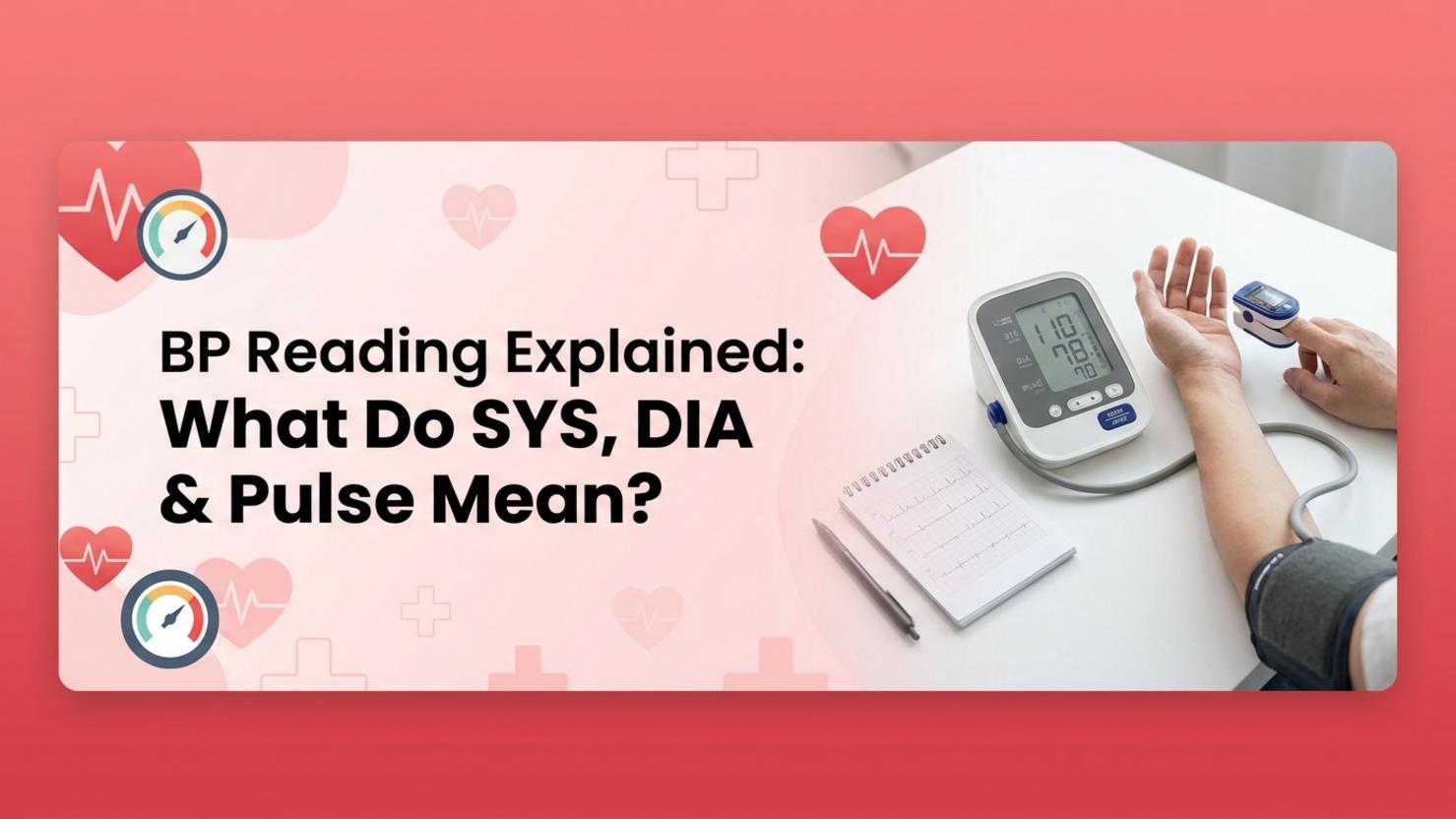
Introduction
Understanding your blood pressure (BP) reading can feel overwhelming, especially when you see numbers like SYS, DIA, and Pulse on your monitor. Your BP reading provides vital insights into your heart’s health. With modern technology, checking your blood pressure at home has become simple and reliable. The Omron HEM 7090 L Automatic BP Monitor, using advanced Oscillometric Technology, empowers you to monitor your BP with confidence. In this article, we will demystify SYS, DIA, and Pulse readings and help you understand their true significance for your well-being.
What Does a BP Reading Consist Of?
A typical BP reading consists of three key numbers you’ll see displayed:
1. SYS (Systolic Pressure): This is the higher number, indicating the pressure when your heart beats and pumps blood.
2. DIA (Diastolic Pressure): The lower number, showing the pressure in your arteries when your heart is at rest between beats.
3. Pulse: The number of heartbeats per minute. This is also known as your heart rate.
Together, these readings provide a full picture of how well your heart and arteries are functioning.
Decoding SYS: Your Systolic Pressure
The SYS value is the top number in your blood pressure reading, shown before the slash (for example, 120/80 mmHg).
What does it mean? Systolic pressure measures the force your blood exerts against artery walls when the heart contracts. It is the first number because it represents the moment of highest pressure.
Why does it matter? High systolic readings (above 130 mmHg) can indicate increased risk for heart disease, stroke, and kidney problems. Maintaining a healthy systolic pressure is vital for long-term health.
Understanding DIA: Your Diastolic Pressure
The DIA value is the bottom number, found after the slash in your BP reading.
What does it mean? Diastolic pressure shows the pressure in your arteries when your heart rests between beats. While lower than systolic pressure, it’s equally important.
Why does it matter? Elevated diastolic readings (over 80 mmHg) may increase the risk of cardiovascular issues. Constantly high diastolic pressure is particularly risky in younger adults.
All About Pulse: Your Heart Rate
The Pulse (or heart rate) tells you how many times your heart beats per minute. It is usually measured at the same time as your BP.
What’s normal? For most adults, a healthy resting pulse ranges from 60 to 100 beats per minute.
Why pay attention? Abnormal pulse rates can point to underlying health conditions, including arrhythmias or heart disease. Consistently fast or slow pulse rates should be discussed with your healthcare provider.
How Does the Omron HEM 7090 L Automatic BP Monitor Work?
This device uses advanced Oscillometric Technology to measure your blood pressure automatically. But what does this mean for you?
Oscillometric Technology detects the vibrations in your artery as blood flows through. These vibrations are analyzed to accurately determine your SYS, DIA, and Pulse. The Omron HEM 7090 L Automatic BP Monitor offers:
- Simple, one-touch operation
- Large, clear display of SYS, DIA, and Pulse
- Reliable and accurate readings at home
This ensures you get high-quality health information with every use.
How to Use the Omron HEM 7090 L Automatic BP Monitor for Accurate Results
To get the most accurate BP readings, follow these steps:
1. Sit comfortably with your back supported and feet flat on the floor.
2. Rest your arm at heart level.
3. Wait a few minutes in a calm state before measurement.
4. Place the cuff properly on your upper arm, as instructed in the user manual.
5. Press the start button and relax until the monitor finishes.
Always take your readings at the same time of day for consistent tracking. Avoid caffeine, exercise, or smoking for at least 30 minutes beforehand.
BP Reading Ranges: What’s Normal, High, and Low?
Knowing the healthy range for your SYS and DIA numbers can help you take action:
- Normal: SYS less than 120 mmHg and DIA less than 80 mmHg
- Elevated: SYS between 120–129 mmHg and DIA less than 80 mmHg
- Hypertension Stage 1: SYS 130–139 mmHg or DIA 80–89 mmHg
- Hypertension Stage 2: SYS 140 mmHg or higher or DIA 90 mmHg or higher
- Low Blood Pressure (Hypotension): SYS less than 90 mmHg or DIA less than 60 mmHg
Unusual readings may require lifestyle adjustments or medical intervention. Consult your doctor if you are unsure about your numbers or notice persistent changes.
Using Home Monitoring for Better Health Management
Monitoring blood pressure at home helps:
- Detect high blood pressure early
- Track the effectiveness of lifestyle changes or medications
- Provide valuable data to your healthcare provider
The Omron HEM 7090 L Automatic BP Monitor makes it easy for anyone to track SYS, DIA, and Pulse over time, promoting better health awareness and communication with your doctor.
Tips for Maintaining Healthy BP Reading Levels
To help keep your SYS, DIA, and Pulse within a healthy range, consider the following:
- Maintain a balanced diet rich in fruits, vegetables, and whole grains
- Exercise regularly
- Limit salt, caffeine, and alcohol intake
- Manage stress through relaxation or mindfulness
- Take prescribed medications as directed
Home monitoring with the Omron HEM 7090 L Automatic BP Monitor helps reinforce these habits by making your numbers visible every day.
How to Interpret Your BP Reading Results
Interpreting your BP readings is straightforward once you understand the numbers:
- Compare SYS and DIA to the standard ranges
- Note if your Pulse is regularly outside of 60-100 beats per minute
- Record your readings and share them with your doctor for expert advice
Remember, a single high or low reading is not usually cause for alarm. Look for trends over several measurements.
How the Omron HEM 7090 L Automatic BP Monitor Supports Safe Health Tracking
The Omron HEM 7090 L Automatic BP Monitor is trusted by healthcare professionals worldwide for its ease of use, accuracy, and reliability. It minimizes human error and provides consistent, high-quality readings at your convenience. This enables you to quickly notice changes, seek timely medical advice, and follow up on treatment plans effectively.
Always use the device as instructed and regularly update your doctor on your results, especially if you notice significant changes.
Conclusion
Understanding your BP reading—specifically, what SYS, DIA, and Pulse mean—is key to proactive health management. Thanks to innovative devices like the Omron HEM 7090 L Automatic BP Monitor powered by Oscillometric Technology, monitoring your numbers at home has never been easier or more reliable. Remember to track your results regularly, maintain a healthy lifestyle, and consult your healthcare provider as needed for optimal heart health. For more tips on living well and managing chronic health conditions, visit our Blog.
FAQs About BP Reading, SYS, DIA & Pulse
What do the numbers SYS and DIA mean in a BP reading?
SYS (systolic) is the top number, showing the pressure when your heart beats. DIA (diastolic) is the bottom number, displaying pressure when your heart is at rest. Both are measured in mmHg and help assess your cardiovascular health.
How often should I check my blood pressure at home?
Frequency depends on your health status, but most doctors recommend checking at the same times daily, especially if you have hypertension or are adjusting medications.
What is a normal BP reading for adults?
A normal BP reading is usually less than 120/80 mmHg. Values above or below this may need further investigation based on your age, health, and medical history.
Can I rely on digital BP monitors like Omron HEM 7090 L Automatic BP Monitor?
Yes, digital devices that use Oscillometric Technology like the Omron HEM 7090 L Automatic BP Monitor provide accurate, reliable readings when used correctly. Always follow the user manual and consult your doctor with any concerns.
What should I do if my BP reading is unusually high or low?
Stay calm and rest for a few minutes, then retake your reading. If abnormal results persist or you have symptoms like chest pain, contact your doctor immediately.




 0
0