Burns are a common injury, often occurring unexpectedly at home or in the workplace. They can be caused by various sources, including heat, chemicals, electricity, and radiation. Understanding the different types of burns, their severity, and appropriate treatment is crucial for a quick recovery and minimizing complications.
This comprehensive guide will provide you with valuable information about burns.
What is Meant by a Burn?
A burn is an injury to the skin or other tissues caused by contact with heat, chemicals, electricity, radiation, or friction. Burns damage skin cells, leading to pain, redness, swelling, and in severe cases, blistering and scarring.
Types of Burns
- Thermal Burns: These are the most common types of burns, caused by heat sources like fire, hot liquids (scalds), hot objects, and steam.
- Chemical Burns: These occur when the skin comes into contact with strong acids, alkalis, detergents, or solvents.
- Electrical Burns: These result from contact with electrical currents, causing damage to the skin and underlying tissues, sometimes even affecting internal organs.
- Radiation Burns: These are caused by overexposure to ultraviolet rays from the sun (sunburn) or other sources of radiation like X-rays.
- Friction Burns: These result from the skin rubbing against a rough surface, causing abrasions and burns.
Degree of Burns
Burns are classified into four degrees based on the depth of skin damage:
First-degree burns
These affect only the outer layer of skin (epidermis). They cause redness, mild pain, and swelling, but typically no blisters. The skin may feel dry and slightly tight. Healing usually occurs within a few days to a week, often without scarring. Mild sunburn is a common example.
Second-degree burns
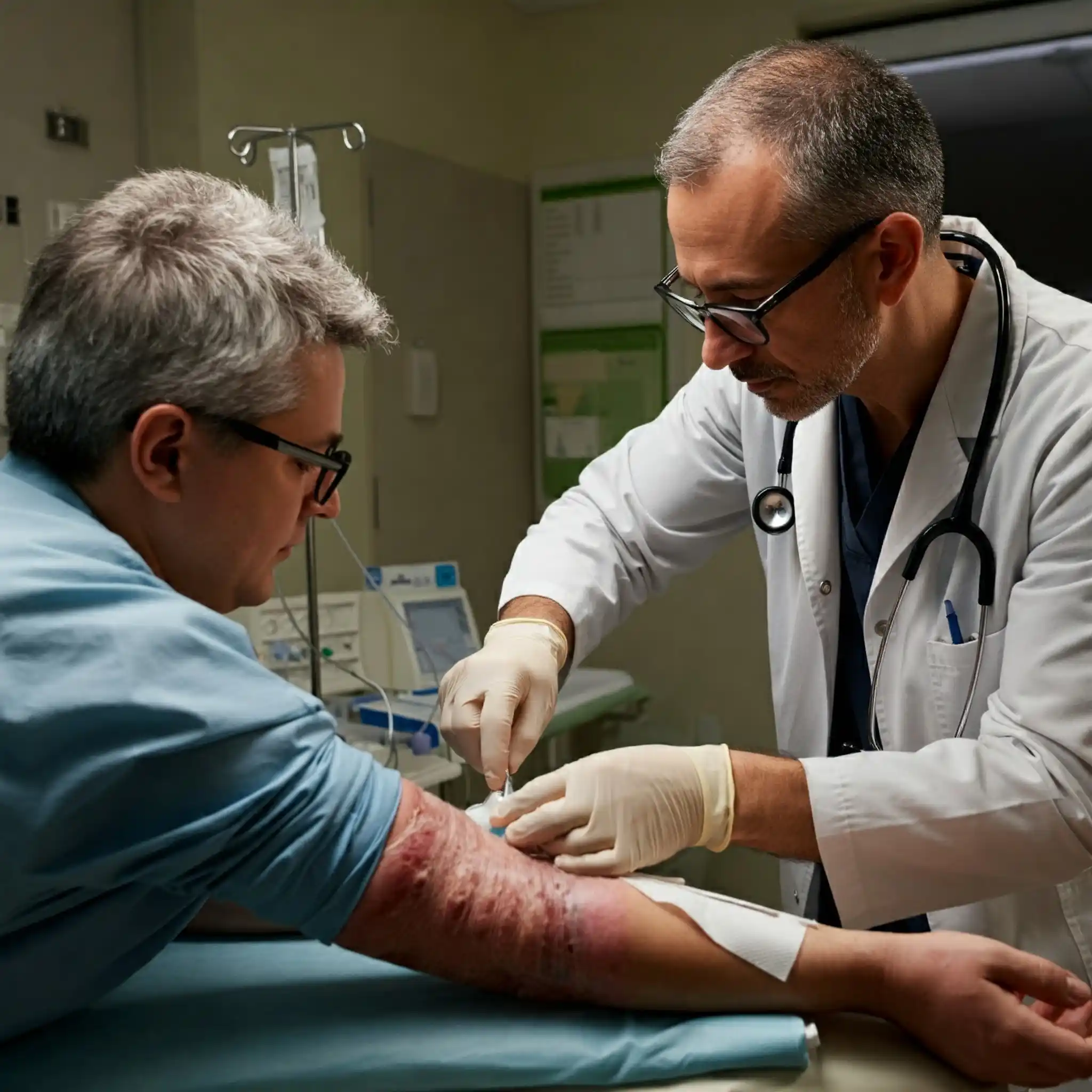
These involve damage to the epidermis and part of the second layer of skin (dermis). They cause blisters, intense pain, redness, and swelling. The blisters may be filled with clear fluid or blood. The skin may appear wet or shiny. Healing time varies depending on the depth of the burn, but it can take several weeks and may result in some scarring.
Third-degree burns
These extend through all layers of the skin and sometimes into underlying tissues like fat, muscle, or bone. The skin may appear white, leathery, or charred. There may be little or no pain due to nerve damage. These burns require specialized medical care and often skin grafting to heal. Scarring is common.
Fourth-degree burns
These are the deepest and most severe burns, extending through the skin and underlying tissues to damage tendons, ligaments, and bones. They often appear charred or blackened. There is no sensation in the affected area due to complete nerve destruction. These burns are life-threatening and require extensive medical treatment, including surgery and rehabilitation.
Causes of Burns
Scalds: Hot liquids like boiling water, coffee, or oil are a common cause of burns, especially in children.
Fire: Contact with flames, such as from house fires, candles, or matches, can cause severe burns.
Hot Objects: Touching hot surfaces like stoves, irons, or hair styling tools can lead to burns.
Chemicals: Household cleaning products, industrial chemicals, and even certain plants can cause chemical burns.
Electricity: Faulty wiring, electrical appliances, and power lines can cause electrical burns.
Sun Exposure: Prolonged exposure to the sun's ultraviolet rays can result in sunburn.
Symptoms of Burns
Symptoms vary depending on the degree of the burn:
- First-degree: Redness, mild pain, swelling.
- Second-degree: Blisters, intense pain, redness, swelling.
- Third-degree: White or charred skin, leathery appearance, may have little or no pain.
- Fourth-degree: Charred or blackened skin, exposed bone or muscle, no sensation.
Treatment and Management of Burns
First-degree burns
- Cooling: Cool the burn with cool running water for 10-20 minutes. This helps to reduce pain, inflammation, and prevent further damage.
- Moisturizing: Apply aloe vera gel or a gentle moisturizer to soothe the skin and keep it hydrated.
- Pain Relief: Over-the-counter pain relievers like ibuprofen or acetaminophen can help manage pain.
Second-degree burns
- Cooling: Cool the burn with cool running water for 15-20 minutes.
- Blister Care: Do not break blisters. If a blister breaks, gently clean the area with mild soap and water and cover it with a sterile, non-stick dressing.
- Dressings: Cover the burn with a sterile, non-stick dressing to protect it from infection. Change the dressing daily.
- Pain Relief: Over-the-counter pain relievers can help manage pain.
- Medical Attention: Seek medical attention if the burn is large, deep, or on the face, hands, feet, or genitals.
Third-degree burns
- Emergency Care: Seek immediate medical attention. These burns require specialized care.
- Do Not Remove Clothing: Do not remove clothing stuck to the burn.
- Do Not Apply Anything: Do not apply any ointments, creams, or home remedies to the burn.
- Cover the Burn: Loosely cover the burn with a clean, dry cloth or sterile dressing.
- Pain Management: Pain management will be provided by medical professionals.
Fourth-degree burns
- Emergency Care: Seek immediate medical attention. These burns are life-threatening.
- Stabilize the Patient: Focus on stabilizing the patient's airway, breathing, and circulation.
- Do Not Remove Clothing: Do not remove clothing stuck to the burn.
- Do Not Apply Anything: Do not apply any ointments, creams, or home remedies to the burn.
- Cover the Burn: Loosely cover the burn with a clean, dry cloth or sterile dressing.
- Hospitalization: Requires hospitalization and extensive treatment, including surgery, skin grafts, and rehabilitation.
Possible Complications
Infection: Burns can become infected if not properly cleaned and protected.
Scarring: Severe burns can lead to scarring.
Hypothermia: Large burns can cause the body to lose heat, leading to hypothermia.
Shock: Severe burns can cause shock, a life-threatening condition.
Contractures: Scar tissue can tighten and restrict movement, especially around joints.
Respiratory Problems: Inhaling smoke or fumes can damage the lungs and cause breathing difficulties.
Preventive Measures to Avoid Getting Burnt
Kitchen Safety: Keep hot liquids and objects out of reach of children. Use oven mitts and pot holders. Turn pot handles inward on the stove.
Fire Safety: Install smoke detectors and fire extinguishers. Be careful with candles and matches. Have an escape plan in case of fire.
Electrical Safety: Ensure electrical appliances are in good working order. Cover unused electrical outlets. Teach children about electrical safety.
Sun Safety: Wear sunscreen with an SPF of 30 or higher. Wear protective clothing and seek shade during peak sun hours.
Chemical Safety: Store chemicals properly and wear protective gear when handling them. Keep chemicals out of reach of children.
OTC Antiseptic Creams for Burns
While looking for the best ointment for burns, remember that over-the-counter (OTC) antiseptic burn creams can help in soothing minor burns and preventing infection.
However, they are not necessary for all burns. Cool water and a clean dressing are often sufficient for first-degree burns. For second-degree burns, it's best to consult a doctor before applying any creams.
Final Thoughts
Burns can range from minor inconveniences to life-threatening emergencies. Understanding the different types of burns, their severity, and appropriate first aid measures is crucial for preventing complications and promoting healing. Always seek medical attention for severe burns or if you have any concerns about a burn injury.
Looking for affordable medicines and healthcare products but don't know where to buy them? Check out our Dawaa Dost website, where we make quality and affordable medicines accessible to all!
Sources:
https://www.who.int/news-room/fact-sheets/detail/burns
https://www.hopkinsmedicine.org/health/conditions-and-diseases/burns




 0
0