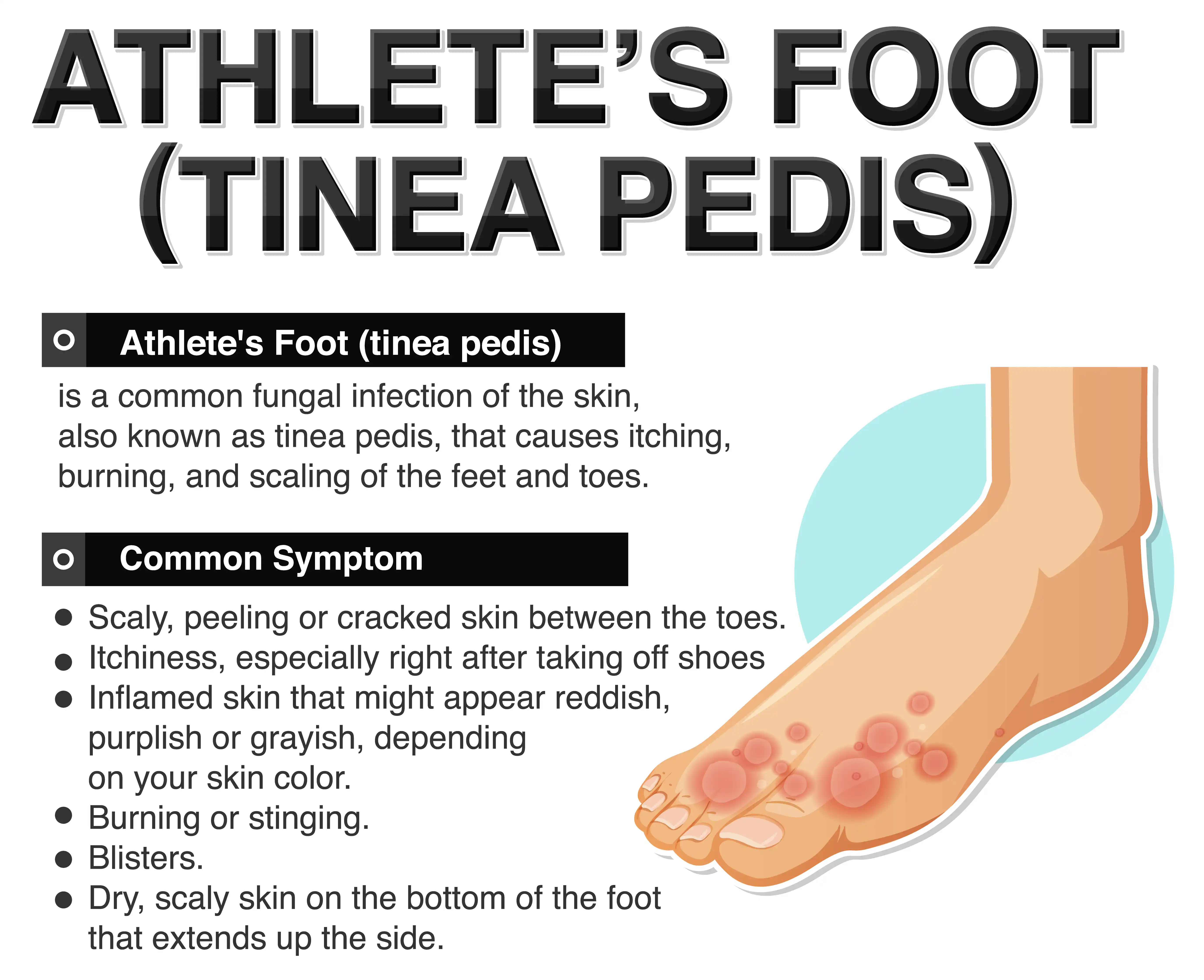
Athlete's foot, also known as tinea pedis, is a common fungal infection that affects the skin on the feet. Despite its name, you don't have to be an athlete to get it! This condition thrives in warm, moist environments, making the feet an ideal breeding ground for the fungi that cause it.
This blog post will provide a complete overview of athlete's foot disease, including its causes, symptoms, diagnosis, treatment, and prevention.
What Causes Athlete's Foot?
Athlete's foot is caused by a group of fungi called dermatophytes that live on the skin, hair, and nails. These fungi love warm, damp places, making the areas between your toes and the soles of your feet particularly vulnerable. Here are some factors that can increase your risk:
- Sweaty feet: People who sweat heavily are more prone to athlete's foot.
- Tight shoes: Wearing tight-fitting shoes or shoes made from materials that don't breathe (like plastic) can trap moisture and create a perfect environment for fungal growth.
- Walking barefoot in public areas: Walking barefoot in public places like locker rooms, showers, and swimming pools exposes your feet to the fungus.
- Sharing personal items: Sharing towels, socks, or shoes with someone who has athlete's foot can spread the infection.
- Weakened immune system: People with weakened immune systems are more susceptible to fungal infections.
Symptoms of Athlete's Foot
Athlete's foot can cause a variety of symptoms, including:
- Itching, burning, and stinging: You might feel these sensations between your toes, on the soles of your feet, or on the sides of your feet.
- Redness and scaling: The skin on your feet may appear red, dry, and flaky.
- Blisters: In some cases, athlete's foot can cause blisters that may ooze fluid.
- Cracking and peeling skin: The skin on your feet, especially between your toes, may crack and peel.
- Thickened or discoloured toenails: If the infection spreads to your toenails, they may become thick, discoloured, and brittle.
How is Athlete's Foot Diagnosed?
Diagnosing athlete's foot often involves a combination of a physical examination and, in some cases, further investigations to confirm the presence of the fungus.
Physical Examination:
- Visual inspection: A doctor will carefully examine your feet, paying close attention to the areas between your toes, the soles, and the sides of your feet. They'll look for characteristic signs of athlete's foot, such as redness, scaling, cracking, and blisters.
- Medical history: Your doctor will ask about your symptoms, including when they started, their severity, and any factors that might be contributing to the infection, such as your footwear, lifestyle, and overall health.
Further Investigations (if needed):
- Potassium hydroxide (KOH) exam: This is a simple and quick test where a small sample of skin is scraped from the affected area. The sample is then treated with potassium hydroxide and examined under a microscope. This helps to dissolve skin cells and makes it easier to identify the presence of fungal elements.
- Fungal culture: In some cases, a fungal culture may be performed. This involves taking a skin scraping and placing it in a special culture medium to grow the fungus. This test can help to identify the specific type of fungus causing the infection, which can be helpful in guiding treatment decisions.
- Skin biopsy: Rarely, a skin biopsy may be necessary, especially if the diagnosis is uncertain or if the infection doesn't respond to treatment. This involves taking a small sample of skin tissue for examination under a microscope.
Athlete's Foot Treatment Options
The goal of treatment is to eliminate the fungus and alleviate symptoms. The specific treatment approach will depend on the severity and type of athlete's foot.
Over-the-counter (OTC) Medications
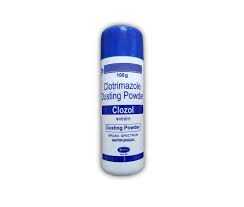
These include antifungal powders, athlete’s foot creams, lotions, gels, or sprays and are usually the first line of treatment for mild to moderate cases of athlete's foot. Common active ingredients include clotrimazole, miconazole, ketoconazole, terbinafine, and tolnaftate.
The medication is applied to the affected area and surrounding skin, usually 1-2 times a day, as directed on the packaging. It's essential to continue treatment for the recommended duration, even if your symptoms improve earlier, to ensure that the infection is fully cleared.
Prescription Medications
Prescription-strength topical medications:
If OTC treatments are ineffective or the infection is more severe, your doctor may prescribe stronger topical antifungal medications. These may contain higher concentrations of antifungal agents or different formulations that are more effective.
Oral antifungal medications:
These medications are taken by mouth and are typically reserved for severe or persistent cases of athlete's foot, or when topical treatments have failed. Common oral antifungals include fluconazole, itraconazole, and terbinafine.
Home Remedies for Athlete's Foot
- Keep your feet clean and dry: Wash your feet twice a day with soap and water, and dry them thoroughly, especially between the toes.
- Wear breathable shoes and socks: Choose shoes made from breathable materials like leather or canvas, and wear socks that wick away moisture.
- Soak your feet in salt water or diluted vinegar: These soaks can help to kill the fungus and reduce inflammation.
- Apply tea tree oil: Tea tree oil has antifungal properties and can be applied to the affected area (diluted with a carrier oil).
When to Schedule a Doctor’s Visit
While most cases of athlete's foot can be managed at home, you should see a doctor if:
- Your symptoms are severe or don't improve after two weeks of home treatment.
- You have diabetes or a weakened immune system.
- The infection has spread to your toenails.
- You develop a fever or signs of a bacterial infection (redness, swelling, pus).
Preventive Measures
Here are some quick tips for preventing this condition:
- Keep your feet clean and dry.
- Wear breathable shoes and socks.
- Change your socks regularly.
- Avoid walking barefoot in public areas.
- Don't share personal items.
- Treat any underlying medical conditions.
FAQs
Is athlete's foot contagious?
Yes, athlete's foot is highly contagious and can be spread through direct contact with an infected person or by touching contaminated surfaces.
Can athlete's foot go away on its own?
In some mild cases, athlete's foot may resolve on its own. However, treatment is usually recommended to prevent complications, speed up healing, and reduce the risk of recurrence.
How long does it take for athlete's foot to heal?
The healing time varies depending on the severity of the infection and individual factors. With proper treatment, most cases of athlete's foot clear up within 2-4 weeks. However, more severe infections or those involving the toenails may take longer to heal.
Can I prevent athlete's foot from coming back?
While there's no guarantee that athlete's foot won't return, you can significantly reduce your risk of recurrence by practicing good foot hygiene, wearing breathable footwear, and avoiding situations that promote fungal growth.
Final Thoughts
Athlete's foot is a common and treatable fungal infection. By understanding its causes, symptoms, and treatment options, you can effectively manage this condition and keep your feet healthy. Remember to practice good foot hygiene and seek medical attention if your symptoms are severe or don't improve with home treatment.
Looking for affordable medicines and healthcare products but don't know where to buy them? Check out our Dawaa Dost website where we make quality and affordable medicines accessible to all!
Disclaimer: This blog post is intended for informational purposes only and should not be considered medical advice. Always consult a healthcare professional for diagnosis and treatment of any medical condition.
Sources
https://www.webmd.com/skin-problems-and-treatments/understanding-athletes-foot-basics
https://my.clevelandclinic.org/health/diseases/22139-athletes-foot-tinea-pedis
Image Source: Image by brgfx on Freepik




 0
0