Pregnancy is the time when you eagerly wait for your baby’s arrival. Along with the excitement, it's natural to be curious about your baby's progress and well-being. A growth scan in pregnancy offers a remarkable glimpse into your baby's development, providing reassurance and valuable information to both you and your healthcare provider.
In this blog post, we'll explain the ins and outs of growth scans, their benefits, and what you can expect during the procedure.
A growth scan in pregnancy, also known as a fetal growth scan or ultrasound, is a non-invasive imaging technique that uses sound waves to create visual images of your baby in the womb. This scan allows your healthcare provider to assess various aspects of your baby's growth and development, including:
Growth scans are typically performed during the second and third trimesters of pregnancy. The exact timing may vary depending on your individual circumstances and any specific concerns your healthcare provider may have. Here are some common scenarios when a growth scan might be recommended:
In most cases, there's no special preparation needed for a growth scan. However, your healthcare provider may give you specific instructions depending on the stage of your pregnancy and the reason for the scan. For example, you might be asked to:
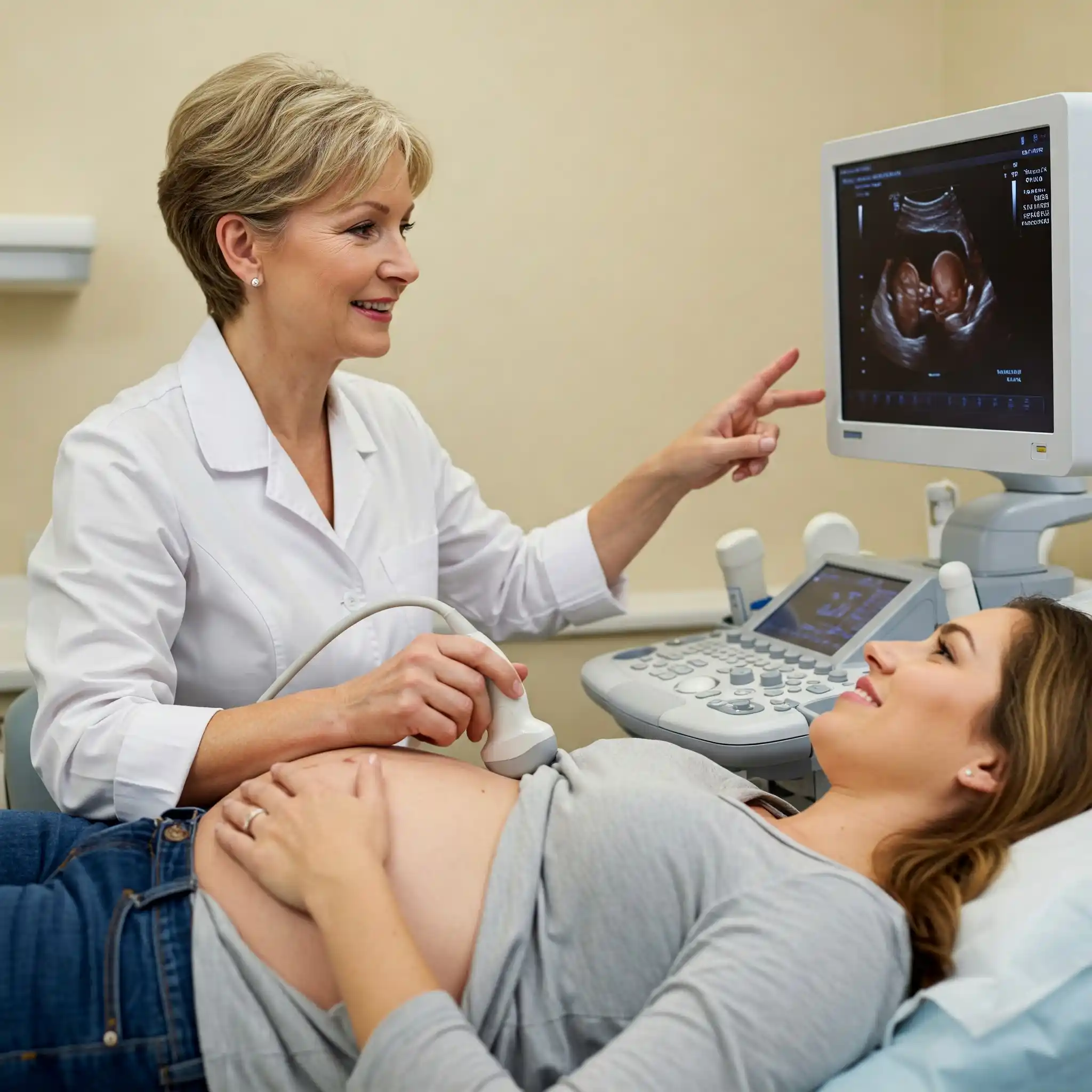
A growth scan is a simple and painless procedure. You'll be asked to lie down on an examination table, and a sonographer will apply a special gel to your abdomen. This gel helps transmit the sound waves effectively. The sonographer will then move a handheld device called a transducer over your belly, capturing images of your baby on a monitor.
You'll be able to see your baby's movements and features in real-time, which is often a truly magical experience for expectant parents.
During the growth scan, the sonographer will take various measurements of your baby, including head circumference, abdominal circumference, and femur length. These measurements are then compared to standardized growth charts to assess whether your baby's growth is within the expected range for their gestational age.
It is important to remember that these measurements are estimates, and some degree of variation is normal. Your healthcare provider will consider your individual circumstances and the overall trend of your baby's growth when interpreting the results.
Growth scans offer several benefits, including:
While both anomaly scans and growth scans use ultrasound technology, they serve different purposes. An anomaly scan in pregnancy, typically performed around 20 weeks of pregnancy, focuses on detecting structural abnormalities in the baby.
A growth scan, on the other hand, primarily assesses the baby's size and growth. In some cases, a growth scan may also reveal certain structural abnormalities, but its main focus is on monitoring fetal development.
If the growth scan reveals a potential problem, such as slow growth or low amniotic fluid, your healthcare provider will discuss the findings with you and recommend appropriate next steps. This may involve:
It's important to remember that every pregnancy is unique, and the appropriate course of action will depend on your individual circumstances. Your healthcare provider will work with you to develop a personalized plan that prioritizes the health and well-being of both you and your baby.
A growth scan is one of the scans that is included in the list of scans during pregnancy. It is a valuable tool that provides crucial insights into your baby's development. By monitoring fetal growth, amniotic fluid levels, and other important factors, growth scans help ensure a healthy pregnancy and provide reassurance to expectant parents.
If you have any questions or concerns about growth scan in pregnancy, don't hesitate to discuss them with your healthcare provider. They can provide personalized guidance and support throughout your pregnancy journey.
Is a growth scan painful?
No, a growth scan is a painless procedure. You may feel some pressure on your abdomen as the sonographer moves the transducer, but it should not be uncomfortable.
How often will I need a growth scan?
The frequency of growth scans varies depending on your individual needs and risk factors. Your healthcare provider will determine the appropriate schedule for you.
What if my baby is measuring small?
If your baby is measuring small, your healthcare provider will investigate the cause and recommend appropriate management, which may include further scans, tests, or closer monitoring.
Can I find out the gender of my baby during a growth scan?
While the primary purpose of a growth scan is to assess your baby's growth, the sonographer may be able to determine the gender if the baby is in a favorable position.
What should I do to prepare for a growth scan?
You may be asked to drink water and have a full bladder for earlier scans, but this is usually not necessary for later growth scans. Your healthcare provider will provide specific instructions.
Are there any risks associated with growth scans?
Growth scans use ultrasound technology, which is considered safe for both mother and baby. There are no known risks associated with this procedure.
For more health-related content, visit our Dawaa Dost website. You will also get access to quality medicines and healthcare products, all at affordable prices. Check it out now!
Disclaimer: This article is intended for informational purposes only and should not be considered a substitute for professional medical advice. Always consult a qualified healthcare provider for diagnosis and treatment of any health condition.
Our Services
Knowledge Base
Fetured Categories
© 2026 DawaaDost. All rights reserved. In compliance with Drugs and Cosmetics Act, 1940 and Drugs and Cosmetics Rules, 1945, we don't process requests for Schedule X and other habit forming drugs.