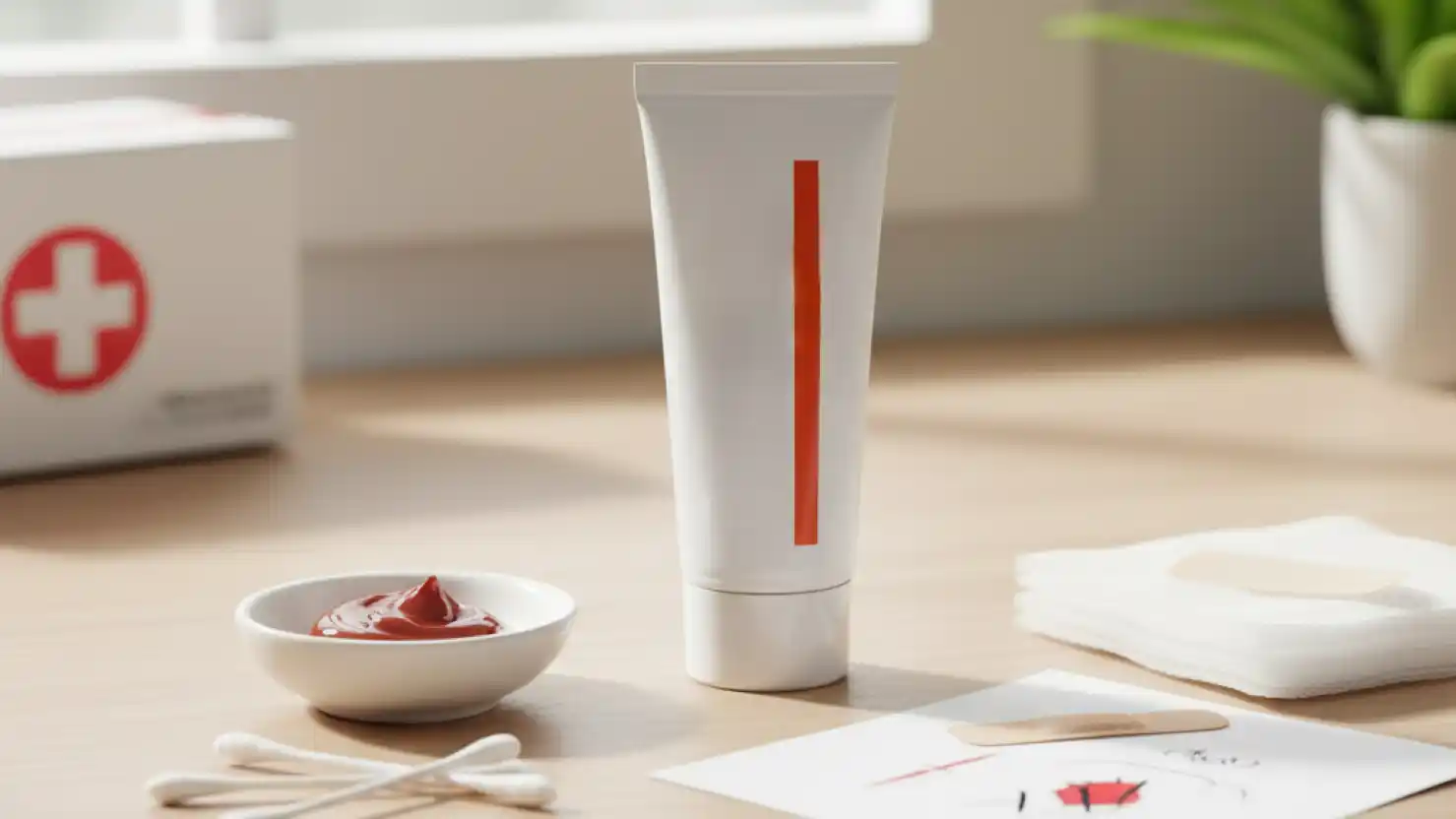
If you’ve ever had a cut, scrape, burn or skin wound and wondered what ointment to use, you may have come across a product containing “povidone-iodine.” In particular, Povidone iodine ointment USP is a trusted antiseptic ointment used widely to manage skin injuries and prevent infections.
In this article, we will explore the various Povidone iodine ointment USP uses, explain how it works, when it is helpful, and what kind of situations it is suited for. The language is kept simple so that you can understand the benefits and uses without confusion.
Use 1: Preventing infection in minor cuts, scrapes and abrasions
One of the most common Povidone iodine ointment USP uses is to clean minor skin injuries such as cuts, scrapes, and abrasions. When the skin’s protective barrier is broken, bacteria can easily enter and cause infection. This ointment acts as an antiseptic by releasing iodine which kills or inhibits the growth of bacteria and other microbes on the skin surface.
Applying a thin layer of povidone iodine ointment soon after the injury can reduce the risk of infection and help the wound heal in a cleaner way.
Use 2: Supporting healing of minor burns and skin-injury wounds
Another important application of Povidone iodine ointment USP uses is for minor burns and skin wounds. When the burn or wound is superficial, the surrounding skin and tissues can be vulnerable to microbial invasion. The antiseptic action of the ointment helps create a safer wound environment.
By keeping the wound clean and reducing infection risk, the body’s natural healing process can proceed more smoothly.
Use 3: Management of skin ulcers and pressure sores
Beyond simple wounds, Povidone iodine ointment USP uses also extend to skin ulcers and pressure sores (decubitus ulcers) in certain settings. The broad-spectrum antimicrobial effect and good tolerance make it appropriate for ulcers where infection or delayed healing is a concern.
In such cases, the ointment is used as part of the wound-care regimen, helping reduce microbial contamination, control inflammation, and enable better tissue repair.
Use 4: Pre- and post-surgical skin preparation and antiseptic skin cleansing
Another key use within the category of Povidone iodine ointment USP uses is for prepping the skin before surgery or a procedure and cleansing it afterwards. Before skin is cut or opened, it is vital to reduce microbial load to prevent post-operative infections.
Post-surgery, when incisions need to stay clean and free from infection, using a suitable antiseptic ointment like povidone iodine helps maintain skin hygiene and supports recovery.
Use 5: First-aid antiseptic for general wound and skin care
Another everyday use of Povidone iodine ointment USP is as a first-aid antiseptic in home kits. Because of its relatively safe profile for superficial skin injury, many people keep povidone iodine ointment ready for unexpected minor injuries, insect bites, or when outdoors.
The product’s broad action against bacteria, fungi, and some viruses makes it a useful general-purpose skin antiseptic.
In this way, it helps reduce worry about infection and supports quicker, cleaner healing from small mishaps.
Use 6: Use in contaminated or high-risk skin areas (wet wounds, surgical dressings)
Finally, one of the more specialised Povidone iodine ointment USP uses is for wounds or dressings in risk situations — for example, wet wounds, wounds that may harbour biofilms, or areas that are exposed to higher risk of microbial contamination (such as surgical sites, catheter exit sites, or diabetic foot wounds).
In summary, in high-risk skin injury settings, the use of this ointment can be an important part of wound-care protocols.
The mechanism of action underlying Povidone iodine ointment USP uses centres on iodine being released from the povidone-iodine complex (indicated by USP) and penetrating microbes on the skin surface. The free iodine then disrupts proteins and nucleic acids of bacteria, fungi, and viruses, leading to their death or inability to multiply.
Because it acts broadly and resistance is uncommon, it remains a staple antiseptic for many skin applications.
People who might benefit from using povidone iodine ointment include those who suffer minor skin injuries, have skin ulcers or pressure sores, are preparing for or recovering from surgery, or need a reliable first-aid antiseptic in the home. However, it should always be used as directed and with awareness of any skin sensitivities.
Despite its broad uses, there are certain situations where it may not suffice alone:
For best results from Povidone iodine ointment USP uses, these tips help:
Povidone iodine ointment is generally well tolerated when used externally on intact skin. However:
In summary, the scope of Povidone iodine ointment USP uses is wide and covers many practical skin-injury and infection-prevention scenarios. Whether it’s preventing infection in minor cuts, helping heal burns and skin ulcers, aiding wound care in higher-risk settings, or serving as a trusted first-aid antiseptic in the home – this ointment offers a reliable option for skin surface antisepsis and healing support.
While it is effective, its use should always fit within broader care — proper wound cleaning, monitoring, dressing changes, underlying risk-factor control, and medical supervision when needed. If you ever have a wound that is deep, large, severely infected, or not improving, you should seek professional care. Using povidone iodine ointment as part of your routine skin-injury toolkit means you’re giving your skin a strong ally in preventing infections and supporting healing.
Popular brands of Povidone iodine ointment include Povi 10 Ointment and Drez 10% Ointment. These are readily available on Dawaa Dost website. Take a look now!
1. What is Povidone iodine ointment USP used for?
It is used primarily to prevent and treat skin infections in minor cuts, scrapes, burns, ulcers, and other superficial wounds.
2. Can Povidone iodine ointment USP be used on burns?
Yes, it is suitable for minor burns (superficial) and helps reduce infection risk and support healing.
3. Is this ointment suitable for skin ulcers and pressure sores?
Yes, in many cases it is used as part of wound care for skin ulcers and pressure sores to reduce microbial load and assist healing.
4. Can I use it for deep puncture wounds or animal bites?
No, deep puncture wounds and animal bites often require specialised medical care beyond just this ointment.
5. Are there any precautions while using Povidone iodine ointment USP?
Yes, avoid use on very large areas without medical advice, watch for skin irritation, and ensure you’re not allergic to iodine or related substances.
6. How long should I use this ointment for a minor wound?
Use until the area shows clear signs of healing and reduced infection risk; if there’s no improvement within a few days or it worsens, seek medical help.
7. Can it stain the skin or fabrics?
Yes, iodine-based products can sometimes lightly stain skin or fabrics; rinse carefully or change dressings to avoid visible marks.
इस ब्लॉग को हिंदी में पढ़ें: पोविडोन आयोडीन ऑइंटमेंट के उपयोग क्या हैं? (Povidone Iodine Ointment USP Uses in Hindi)
Disclaimer: This article is intended for informational purposes only and should not be considered a substitute for professional medical advice. Always consult a qualified healthcare provider for diagnosis and treatment of any health condition.
Our Services
Knowledge Base
Fetured Categories
© 2026 DawaaDost. All rights reserved. In compliance with Drugs and Cosmetics Act, 1940 and Drugs and Cosmetics Rules, 1945, we don't process requests for Schedule X and other habit forming drugs.