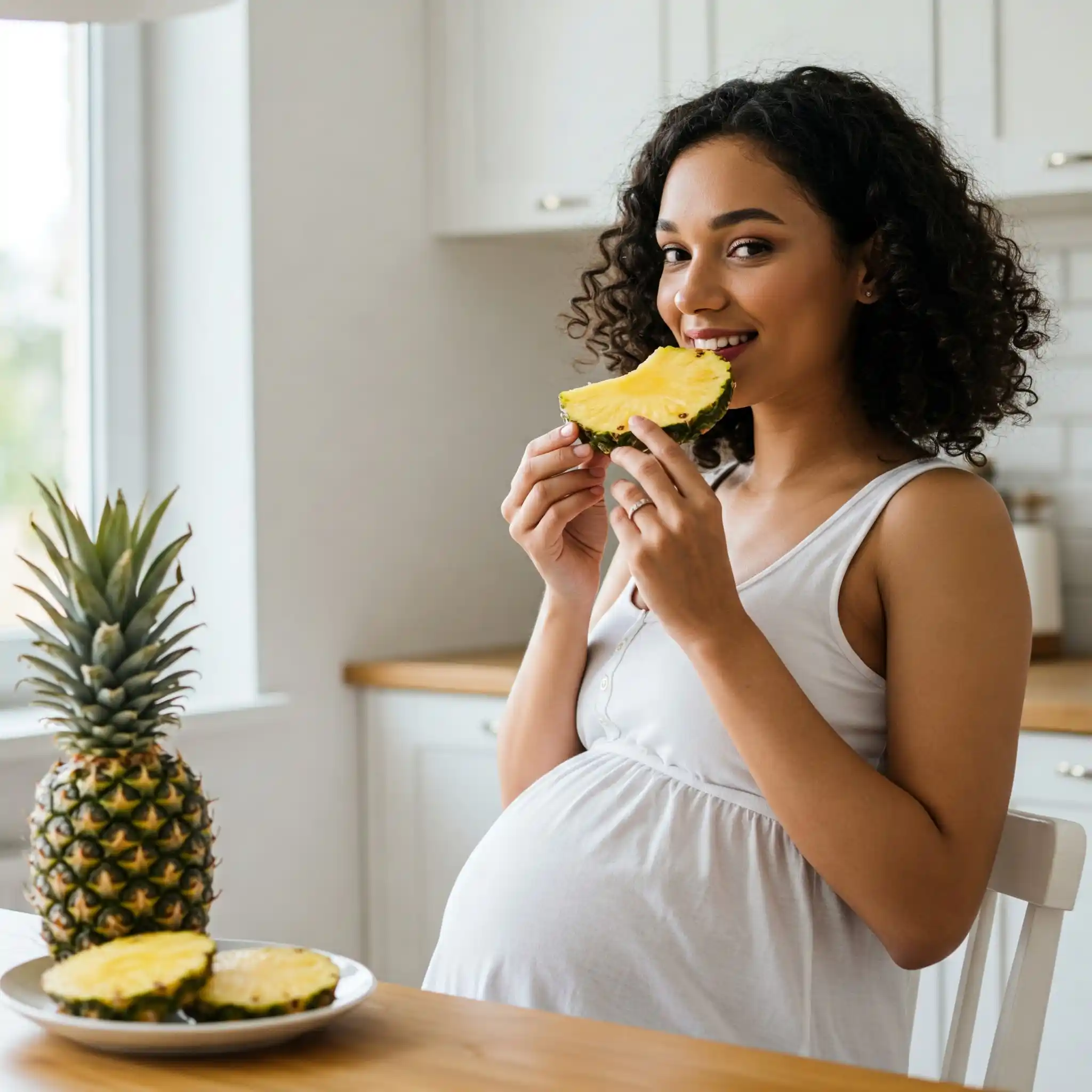
Ah, pineapple – the sweet, tangy, tropical delight! But if you're pregnant, you might have heard whispers about this juicy fruit being off-limits. Fear not, expectant mamas! Pineapple in pregnancy is perfectly safe and even offers some great health benefits when consumed in moderation.
However, like many things in life, too much of a good thing can have drawbacks. While pineapple and pregnancy can be a healthy combination, excessive consumption can lead to some unwanted side effects.
This blog post will explore the nutritional benefits and potential concerns of pineapple while pregnant.
Pineapple is a nutritional powerhouse packed with vitamins, minerals, and other compounds that can benefit both you and your growing baby. Here's a look at its key nutrients:
Pineapple during pregnancy, when enjoyed in moderation, can be a delicious way to support your health and your baby's development. Here's a closer look at its advantages:
Improved Digestion
Pregnancy hormones can slow down digestion, leading to uncomfortable issues like bloating, constipation, and heartburn. Pineapple contains bromelain, a powerful enzyme that helps break down proteins, making it easier for your body to digest food and absorb nutrients. This can help alleviate digestive discomfort and promote regularity.
Boosted Immunity
Your immune system needs extra support during pregnancy to protect both you and your baby from infections. Pineapple is an excellent source of vitamin C, a potent antioxidant that strengthens your body's natural defenses. Vitamin C also aids in iron absorption, which is crucial for preventing anemia during pregnancy.
Reduced Inflammation
Swelling and inflammation are common during pregnancy, especially in the legs and feet. Bromelain, in addition to its digestive benefits, also has anti-inflammatory properties. It can help reduce swelling and discomfort, contributing to a more comfortable pregnancy.
Nausea Relief
Morning sickness can be a challenging symptom in early pregnancy. While research is limited, some women find that pineapple helps alleviate nausea, possibly due to its bromelain content and refreshing taste. The tangy flavor and high water content can also be soothing to an upset stomach.
Healthy Growth and Development
Pineapple is a good source of folate, a B vitamin that's crucial for your baby's healthy development, particularly in the early weeks of pregnancy. Folate helps prevent neural tube defects, which are serious birth defects of the brain and spine. It also contributes to the healthy formation of your baby's heart and other vital organs.
Stronger Bones
Pineapple contains manganese, an essential mineral for bone health. Manganese helps your body form strong bones and connective tissue, supporting both your skeletal health and your baby's bone development.
Increased Energy Levels
Pregnancy can be tiring! Pineapple is a natural source of sugars, providing a healthy energy boost to combat fatigue. The vitamins and minerals in pineapple also contribute to overall energy production and help you feel more vibrant.
Improved Blood Circulation
Pineapple contains copper, another essential mineral that helps with the formation of red blood cells. Adequate copper levels support healthy blood circulation, ensuring that both you and your baby receive sufficient oxygen and nutrients.
Healthy Skin and Tissue
Vitamin C in pineapple is essential for collagen production. Collagen is a protein that provides structure to your skin, bones, and connective tissues. Consuming adequate vitamin C can help maintain healthy skin and promote wound healing.
While pineapple and pregnancy can be a healthy combination, it's essential to consume it in moderation. Excessive pineapple consumption, especially in the early stages of pregnancy, can lead to:
So, how much is too much? Most experts recommend limiting pineapple consumption to one cup of fresh pineapple or one glass of pineapple juice per day. It's also advisable to avoid pineapple on an empty stomach, as this can increase the risk of heartburn.
While generally safe, there are a few potential risks associated with eating pineapple during pregnancy, especially when consumed in excess:
The notion that pineapple can induce labor is a persistent myth. While bromelain, an enzyme found in pineapple, can soften tissue, the amount present in a typical serving of pineapple is not nearly enough to cause significant cervical changes or induce labor.
To put it into perspective, you would need to consume massive amounts of pineapple – around 7 to 10 whole pineapples – to ingest enough bromelain to have any potential effect on labor.
Therefore, enjoying pineapple in moderation will not trigger labor. If you have concerns about preterm labor, discuss them with your healthcare provider.
Here are some tips for safely enjoying pineapple while pregnant:
Pineapple in pregnancy can be a healthy and refreshing addition to your diet. It provides essential nutrients, aids digestion, and can even help with some common pregnancy complaints. However, remember that moderation is key. By following the guidelines and listening to your body, you can safely enjoy this tropical delight and reap its benefits throughout your pregnancy.
1. Can I eat pineapple core during pregnancy?
It's best to avoid the core as it's tough and fibrous, making it difficult to digest.
2. Is canned pineapple safe during pregnancy?
Yes, canned pineapple is safe, but choose varieties packed in water or natural juice, without added sugar.
3. Can pineapple cause miscarriage?
The myth that pineapple causes miscarriage is largely unfounded. Moderate consumption is safe.
4. Can I drink pineapple juice every day during pregnancy?
One glass of pineapple juice per day is generally considered safe.
5. Is pineapple good for constipation during pregnancy?
Yes, the fiber in pineapple can help prevent and relieve symptoms of constipation.
6. Can I eat pineapple in my first trimester?
Yes, you can eat pineapple in the first trimester, but in moderation.
7. What are the signs of pineapple allergy?
Allergic reactions to pineapple can include itching, hives, swelling, and difficulty breathing.
8. Can pineapple help with water retention during pregnancy?
Pineapple has a diuretic effect, which may help reduce mild water retention.
9. Can I use bromelain supplements during pregnancy?
Consult your doctor before taking any supplements, including bromelain, during pregnancy.
10. Can I eat dried pineapple during pregnancy?
Yes, dried pineapple is safe, but be mindful of the sugar content and portion size.
11. Is drinking pineapple juice during pregnancy safe?
Yes, drinking pineapple juice during pregnancy is generally safe in moderation. Ask your doctor for advice.
For more health-related content, visit our Dawaa Dost website. You will also get access to quality medicines and healthcare products, all at affordable prices. Check it out now!
Disclaimer: This article is intended for informational purposes only and should not be considered a substitute for professional medical advice. Always consult a qualified healthcare provider for diagnosis and treatment of any health condition.
Our Services
Knowledge Base
Fetured Categories
© 2026 DawaaDost. All rights reserved. In compliance with Drugs and Cosmetics Act, 1940 and Drugs and Cosmetics Rules, 1945, we don't process requests for Schedule X and other habit forming drugs.