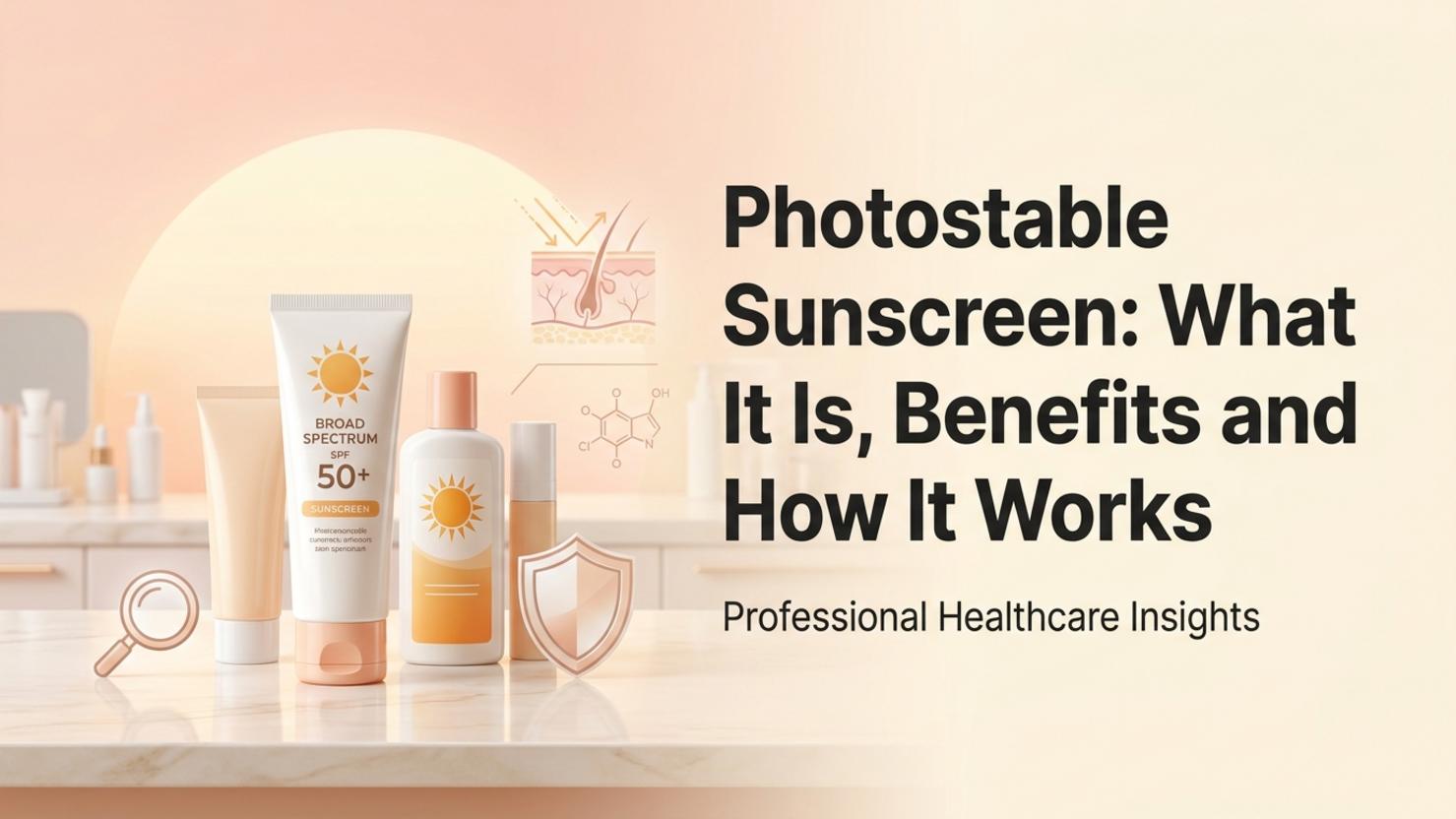
With increasing sun exposure and rising concerns about skin health, finding the right sunscreen is more important than ever. Have you heard about photostable sunscreen but aren’t sure what it really means for your skin? You’re not alone. Photostability in sunscreens is a critical but often overlooked feature. It plays a major role in determining how well your sunscreen protects you throughout the day. In this article, we’ll unravel the science behind photostable sunscreen, discuss its benefits, and explain how it works. We will also highlight the advantages of modern products like the Dot & Key Vitamin C + E Super Bright Sunscreen SPF 50+ PA++++ With New Age UV Filter, designed to offer photostable, broad-spectrum protection. Read on to ensure your sunscreen choice gives you effective and long-lasting defense every day.
Photostable sunscreen refers to formulations that remain stable and continue to offer protection, even after prolonged exposure to sunlight. When certain sunscreen ingredients break down or lose effectiveness under UV rays, the level of protection can decrease rapidly. This is where photostability becomes essential. A photostable sunscreen maintains its structure and filtering ability on your skin, ensuring the labeled SPF remains effective for longer periods in the sun.
If a sunscreen isn’t photostable, it can degrade soon after application, leaving your skin vulnerable to UV damage. Photostable sunscreens, by contrast, continue to safeguard your skin, minimize the need for frequent reapplication, and help prevent sunburn, premature aging, and even skin cancer. For outdoor activities, long commutes, or tropical climates, choosing a photostable sunscreen becomes even more crucial.
The effectiveness of a sunscreen depends on the stability of its UV filters—the active components that absorb or reflect UV radiation. Photostable sunscreens are formulated with advanced, modern UV filters that don’t easily break down in sunlight. For example, the Dot & Key Vitamin C + E Super Bright Sunscreen SPF 50+ PA++++ With New Age UV Filter uses innovative filters to deliver high-level, broad-spectrum protection without rapidly degrading under the sun’s rays.
When a non-photostable sunscreen is exposed to UV radiation, its molecules may change structure and reduce its SPF. Photostable molecules remain intact, continually protecting your skin. This is especially important for preventing cumulative skin cell damage over hours of sun exposure. Sunscreens with SPF 50 or higher and high photostability ratings are often ideal for demanding conditions.
Choosing a photostable sunscreen brings a range of benefits for all skin types and ages:
This sunscreen stands out for its use of next-generation UV filters that deliver photostable and broad-spectrum protection. Here’s why it’s a smart choice for daily skin defense:
With many options on the market, here are factors to consider for optimal sun protection:
Not all sunscreens are created equal. Traditional sunscreens with unstable filters may lose effectiveness rapidly and require more frequent reapplication. Photostable sunscreens, on the other hand, maintain their protective power, reduce product wastage, and provide peace of mind by keeping your skin shielded for longer.
While photostable sunscreens are superior in maintaining their protective effects under sunlight, reapplication every two hours is still recommended, especially after sweating, swimming, or towel-drying. However, with increased photostability, the risk from brief lapses in reapplication is reduced.
To maximize protection, follow these steps:
Photostable sunscreen is recommended for everyone, but is especially beneficial for:
Photostable sunscreen forms the foundation of a smart sun protection regimen. Enhance its effectiveness by:
For additional skincare tips and insights, visit our Blog.
Sun safety is more than a daily routine—it's a commitment to lifelong skin health. Photostable sunscreens, like Dot & Key Vitamin C + E Super Bright Sunscreen SPF 50+ PA++++ With New Age UV Filter, bring advanced protection that lasts, letting you enjoy the outdoors with confidence. Always check for photostability in your sunscreen and choose products with credible, innovative ingredients. With the right protection, you can say goodbye to sunburns and hello to radiant, healthy skin.
Photostable sunscreen is a formula designed to remain stable and active even after prolonged exposure to sunlight. Unlike some sunscreens that break down quickly, photostable products maintain their protective abilities for longer periods, ensuring effective sun protection throughout the day.
Photostable sunscreens offer longer-lasting protection, reduce the need for frequent reapplication, and safeguard against early breakdown under sunlight. This helps maintain skin health and decreases the risk of sunburn, tanning, and long-term skin damage.
Yes, by sustaining strong and stable protection against UVA and UVB rays, photostable sunscreens help prevent tanning, pigmentation, and the formation of dark spots. Consistent use is key for best results.
Yes, this sunscreen is formulated for all skin types, including sensitive skin. Its lightweight, non-sticky, and antioxidant-rich formula makes it suitable for those prone to irritation or breakouts.
Even with photostable sunscreen, reapply every two hours, especially after swimming, sweating, or towel-drying. While photostable formulas last longer, regular reapplication ensures optimal protection.
Disclaimer: This article is intended for informational purposes only and should not be considered a substitute for professional medical advice. Always consult a qualified healthcare provider for diagnosis and treatment of any health condition.
Our Services
Knowledge Base
Fetured Categories
© 2026 DawaaDost. All rights reserved. In compliance with Drugs and Cosmetics Act, 1940 and Drugs and Cosmetics Rules, 1945, we don't process requests for Schedule X and other habit forming drugs.