Glaucoma is one of the leading causes of blindness worldwide, affecting millions of people. Often referred to as the 'silent thief of sight,' glaucoma can develop slowly over time, with many individuals unaware they have the condition until significant vision loss occurs. A pressing question many individuals ask, especially if they have a family member with glaucoma, is: Is glaucoma hereditary?
In this blog, we will explore what glaucoma is, the role genetics plays in its development, and other risk factors that contribute to this eye condition. We’ll also provide information on how to prevent or manage glaucoma if you’re at risk, and how early detection can preserve your vision.
What is Glaucoma?
Glaucoma is a group of eye conditions that damage the optic nerve, which is crucial for good vision. This damage is often caused by abnormally high pressure in the eye (known as intraocular pressure or IOP). Over time, the increased pressure damages the optic nerve, leading to vision loss.
There are two primary types of glaucoma:
- Primary Open-Angle Glaucoma (POAG): The most common form, where the drainage canals in the eye become clogged over time, leading to increased eye pressure.
- Angle-Closure Glaucoma (ACG): A less common but more sudden form, where the drainage angle between the iris and the cornea becomes blocked, leading to a rapid increase in eye pressure.
If left untreated, glaucoma can lead to irreversible blindness. While it can affect anyone, the risk increases with age and certain other factors, including genetics.
Is Glaucoma Hereditary?
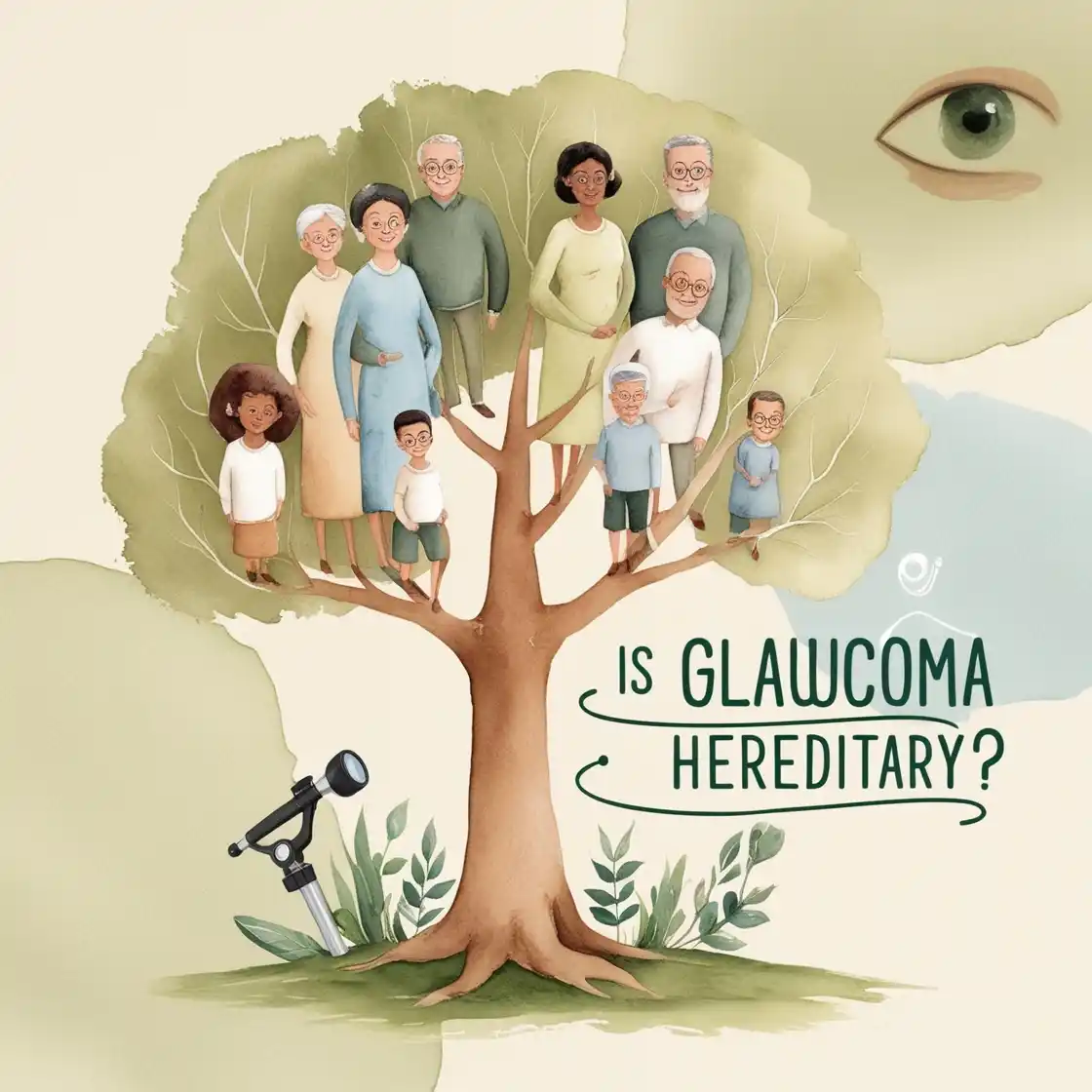
The simple answer is: Yes, glaucoma can be hereditary. Several studies have shown that genetics play a significant role in the development of glaucoma, especially certain types. If you have a family history of glaucoma, your risk of developing the condition is higher compared to someone with no family history.
Let’s break down the hereditary aspects of glaucoma:
1. Primary Open-Angle Glaucoma (POAG)
POAG is the most common type of glaucoma, and research has found a strong genetic link. If a parent or sibling has POAG, your risk of developing the condition increases significantly.
Studies show that individuals with a first-degree relative (parent, sibling, or child) with glaucoma are four to nine times more likely to develop the condition. Several genes have been linked to POAG, including MYOC (myocilin) and OPTN (optineurin), which have been associated with the regulation of eye pressure and optic nerve health.
2. Juvenile Open-Angle Glaucoma (JOAG)
Although less common, juvenile open-angle glaucoma (JOAG) typically occurs before the age of 40 and is strongly linked to genetics. In cases of JOAG, mutations in the MYOC gene have been identified, leading to the early onset of the disease. If a parent has JOAG, the risk of the child developing this form of glaucoma is considerably higher.
3. Angle-Closure Glaucoma (ACG)
While ACG has a less definitive genetic link than POAG, studies have shown that certain populations, such as people of Asian or Inuit descent, have a higher risk of developing ACG, suggesting a potential genetic component. Family history also increases the risk, but environmental factors and physical attributes of the eye, such as a shallow anterior chamber, play a larger role in ACG.
4. Secondary Glaucoma
While secondary glaucoma (glaucoma that develops due to another condition, such as injury or inflammation) is not typically hereditary, it can occur in individuals with a genetic predisposition to high eye pressure or other risk factors that lead to the development of glaucoma.
Other Risk Factors for Glaucoma
While genetics can increase your risk, other factors can also contribute to the development of glaucoma. Understanding these risk factors can help you take preventative measures to protect your vision.
1. Age
Glaucoma becomes more common with age, particularly after the age of 40. The risk increases further in individuals over 60.
2. Ethnicity
Certain ethnic groups are more prone to glaucoma. For example, African Americans are more likely to develop POAG and at a younger age. Hispanics and Latinos also have a higher risk, particularly after age 60. As mentioned earlier, people of Asian or Inuit descent have a higher likelihood of developing ACG.
3. High Intraocular Pressure (IOP)
Elevated intraocular pressure is the most significant risk factor for glaucoma. Routine eye exams can help monitor your IOP and catch any early signs of glaucoma.
4. Thin Corneas
Individuals with thin corneas (specifically, a thin central corneal thickness) are at an increased risk for developing glaucoma. This physical characteristic can be inherited.
5. Previous Eye Injuries
A history of eye injuries, inflammation, or retinal detachment can lead to secondary glaucoma, particularly if they resulted in changes in eye pressure.
6. Medical Conditions
Certain medical conditions, such as diabetes, hypertension, and even migraine, can increase your risk for developing glaucoma.
How to Lower Your Risk of Glaucoma
If you know that glaucoma runs in your family, taking proactive steps can help reduce your risk or catch the condition early enough to prevent significant vision loss.
1. Get Regular Eye Exams
The most important step in protecting your vision is scheduling regular eye exams. If you’re at high risk due to family history, your doctor may recommend more frequent exams, such as every 1-2 years after age 40.
During an eye exam, your eye doctor will check your intraocular pressure (IOP), examine your optic nerve, and assess other risk factors. Early detection of elevated IOP can allow for early intervention to prevent the progression of glaucoma.
2. Maintain a Healthy Lifestyle
A balanced diet, regular exercise, and controlling conditions like diabetes and high blood pressure can lower your risk of glaucoma. Some research suggests that aerobic exercise can help reduce intraocular pressure, which can reduce your risk of glaucoma progression.
3. Know Your Family History
If you have a family history of glaucoma, inform your eye doctor. Knowing your genetic predisposition can guide your doctor in recommending earlier or more frequent screening.
4. Protect Your Eyes from Injury
Wearing protective eyewear during activities that might result in eye injury (such as sports or home repairs) can help prevent trauma that could lead to glaucoma.
Treatment Options for Glaucoma
While glaucoma can’t be cured, there are several effective treatments that can help manage the condition and prevent further vision loss. These include:
- Eye drops: The first line of defense in treating glaucoma is usually medicated eye drops that help reduce intraocular pressure.
- Laser treatment: Laser therapy can improve the drainage of fluid from the eye, helping to reduce IOP.
- Surgery: In more advanced cases, surgery might be necessary to create new drainage channels for the eye fluid, helping to lower pressure.
If you are diagnosed with glaucoma, it’s crucial to follow your doctor’s treatment plan to slow the progression of the disease and protect your remaining vision.
Conclusion
Glaucoma is indeed a hereditary condition, and if you have a family history of the disease, your risk is higher. However, understanding your risk factors and taking preventive measures—such as regular eye exams, maintaining a healthy lifestyle, and protecting your eyes—can help you manage or reduce your chances of developing glaucoma.
Early detection is key in managing glaucoma, as treatments are most effective when the condition is caught in its early stages. If you have a family history of glaucoma or other risk factors, speak with your eye doctor about the best ways to monitor and protect your vision.
For more information on glaucoma and other eye conditions, visit Dawaadost, where you’ll find trusted healthcare advice and products to support your health.




 0
0