
logo.webp

Log in To Dawaa Dost

Welcome! Please enter your details

You want to Leave?

  • Home
  • Blog
  • Hypertension Stages: Understanding Blood Pressure Levels, Risks, and Management

Hypertension Stages: Understanding Blood Pressure Levels, Risks, and Management

9 min read
In this blog

  • Introduction
  • What Are Hypertension Stages?
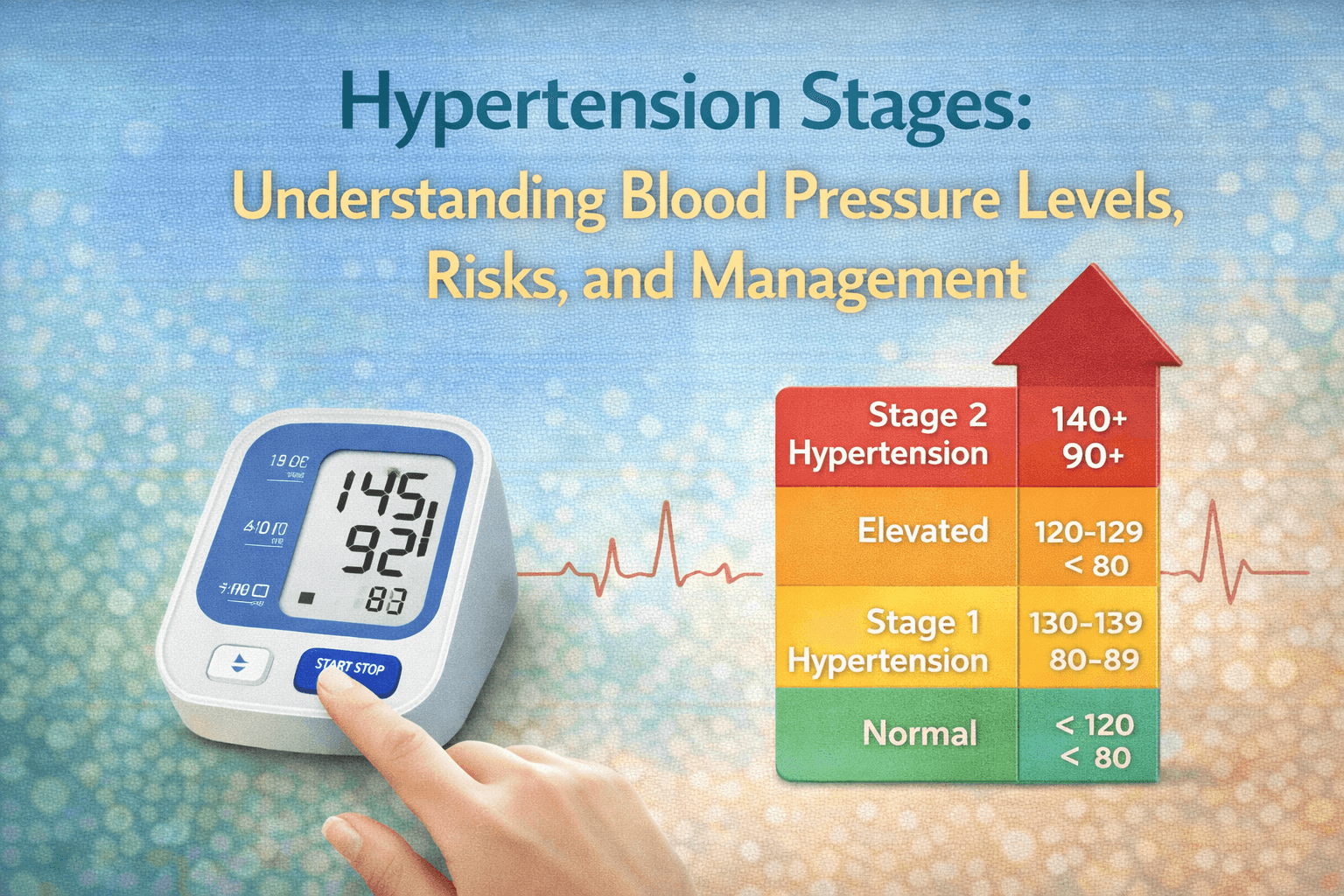
  • Blood Pressure Categories and Ranges
  • Stage-by-Stage Explanation
  • Why Understanding Hypertension Stages is Important
  • Symptoms Across Different Stages
  • Causes of Hypertension
  • Risk Factors
  • Complications of Untreated Hypertension
  • Diagnosis and Monitoring
  • Treatment and Management
  • Conclusion
  • FAQs

Introduction

Hypertension, commonly known as high blood pressure, is one of the most widespread chronic health conditions globally. Often called the “silent killer,” it typically shows no symptoms until serious complications arise. Understanding the different stages of hypertension is crucial for early detection, timely treatment, and prevention of life-threatening conditions such as heart attack, stroke, and kidney disease.

Blood pressure is measured using two numbers:

  • Systolic pressure (top number): Pressure when the heart beats
  • Diastolic pressure (bottom number): Pressure when the heart rests

What Are Hypertension Stages?

Hypertension is classified into categories based on blood pressure readings. These stages help doctors determine the severity of the condition and guide treatment decisions.

According to widely accepted medical guidelines, blood pressure categories include:

  • Normal
  • Elevated
  • Stage 1 Hypertension
  • Stage 2 Hypertension
  • Hypertensive Crisis 

Each stage represents increasing levels of risk and requires different approaches to management.

Blood Pressure Categories and Ranges

Here is a clear breakdown of hypertension stages:

  • Normal: Less than 120/80 mmHg
  • Elevated: 120–129 systolic and less than 80 diastolic
  • Stage 1 Hypertension: 130–139 systolic or 80–89 diastolic
  • Stage 2 Hypertension: 140/90 mmHg or higher
  • Hypertensive Crisis: Above 180/120 mmHg 

These classifications are based on consistent readings taken on multiple occasions, not just a single measurement.

Stage-by-Stage Explanation

1. Normal Blood Pressure

This is the ideal range where the heart and blood vessels function efficiently.

  • Less than 120/80 mmHg
  • Low risk of cardiovascular disease

However, maintaining this level requires a healthy lifestyle, including proper diet and regular exercise.

2. Elevated Blood Pressure

At this stage, blood pressure is higher than normal but not yet classified as hypertension.

  • 120–129 systolic and below 80 diastolic

Although no medication is usually required, this stage is a warning sign. Without intervention, it can progress to hypertension.

3. Stage 1 Hypertension

Stage 1 is the first level of clinically diagnosed high blood pressure.

  • 130–139 systolic or 80–89 diastolic 

At this stage:

  • Lifestyle changes are essential
  • Medication may be prescribed if there is a high risk of heart disease

Most people still do not experience symptoms, making regular monitoring crucial.

4. Stage 2 Hypertension

This is a more severe form of high blood pressure.

  • 140/90 mmHg or higher 

At this stage:

  • Medication is usually required
  • Risk of complications significantly increases
  • Combination therapy (multiple drugs) may be needed

5. Hypertensive Crisis (Severe Stage)

This is a medical emergency.

  • Blood pressure higher than 180/120 mmHg 

It is divided into:

  • Hypertensive urgency: High BP without organ damage
  • Hypertensive emergency: High BP with organ damage

Symptoms may include:

  • Severe headache
  • Chest pain
  • Shortness of breath
  • Vision problems

Immediate medical attention is required.

Why Understanding Hypertension Stages is Important

Knowing your blood pressure stage helps in:

  • Early detection of risk
  • Preventing complications
  • Choosing the right treatment plan
  • Monitoring disease progression

Even slightly elevated levels can lead to serious health issues over time if ignored.

Symptoms Across Different Stages

Hypertension is often asymptomatic, especially in early stages.

Common Observations:

  • No symptoms in normal, elevated, or stage 1
  • Occasional headaches or dizziness in stage 2
  • Severe symptoms in hypertensive crisis

Because symptoms are unreliable, regular BP monitoring is essential.

Causes of Hypertension

Hypertension can develop due to multiple factors:

Primary (Essential) Hypertension

  • No single identifiable cause
  • Linked to genetics, ageing, and lifestyle

Secondary Hypertension

  • Caused by underlying conditions such as:
    • Kidney disease
    • Hormonal disorders
    • Certain medications

Risk Factors

Several factors increase the risk of developing hypertension:

  • Ageing
  • Obesity
  • High salt intake
  • Lack of physical activity
  • Smoking
  • Alcohol consumption
  • Stress
  • Family history

Complications of Untreated Hypertension

If left unmanaged, hypertension can lead to:

  • Heart attack
  • Stroke
  • Heart failure
  • Kidney damage
  • Vision loss

The risk increases significantly as blood pressure moves from stage 1 to stage 2 and beyond.

Diagnosis and Monitoring

Hypertension is diagnosed when:

  • Blood pressure readings are consistently high
  • Measurements are taken on multiple occasions 

Monitoring Methods:

  • Clinic-based BP measurement
  • Home blood pressure monitors
  • Ambulatory BP monitoring

Regular monitoring helps track progression and treatment effectiveness.

Treatment and Management

1. Lifestyle Changes (First Line of Defense)

  • Reduce salt intake
  • Eat a balanced diet (DASH diet)
  • Exercise regularly
  • Maintain healthy weight
  • Quit smoking
  • Limit alcohol

2. Medications

Depending on the stage:

  • Stage 1: May or may not require medication
  • Stage 2: Usually requires medication
  • Crisis: Immediate hospital treatment

Common drug classes include:

  • ACE inhibitors
  • Beta-blockers
  • Calcium channel blockers
  • Diuretics

3. Stress Management

  • Meditation
  • Yoga
  • Deep breathing exercises
  • Proper sleep

Conclusion

Understanding hypertension stages is essential for maintaining long-term health. Each stage represents a different level of risk, and early intervention can prevent serious complications. Since high blood pressure often develops silently, regular monitoring and proactive lifestyle changes are the key to effective management.

By staying informed and taking timely action, individuals can control their blood pressure and lead a healthier, longer life.

For more expert-backed healthcare insights and affordable medicine solutions, visit Dawaadost and take control of your health today.

FAQs

1. What is the normal blood pressure range?

Less than 120/80 mmHg.

2. When does hypertension start?

At 130/80 mmHg or higher.

3. Is stage 1 hypertension serious?

Yes, it increases the risk of heart disease if not managed.

4. What is a hypertensive crisis?

A condition where BP exceeds 180/120 mmHg and requires emergency care.

5. Can hypertension be reversed?

It can be managed effectively with lifestyle changes and medication.

Disclaimer: This article is intended for informational purposes only and should not be considered a substitute for professional medical advice. Always consult a qualified healthcare provider for diagnosis and treatment of any health condition.

Popular Products