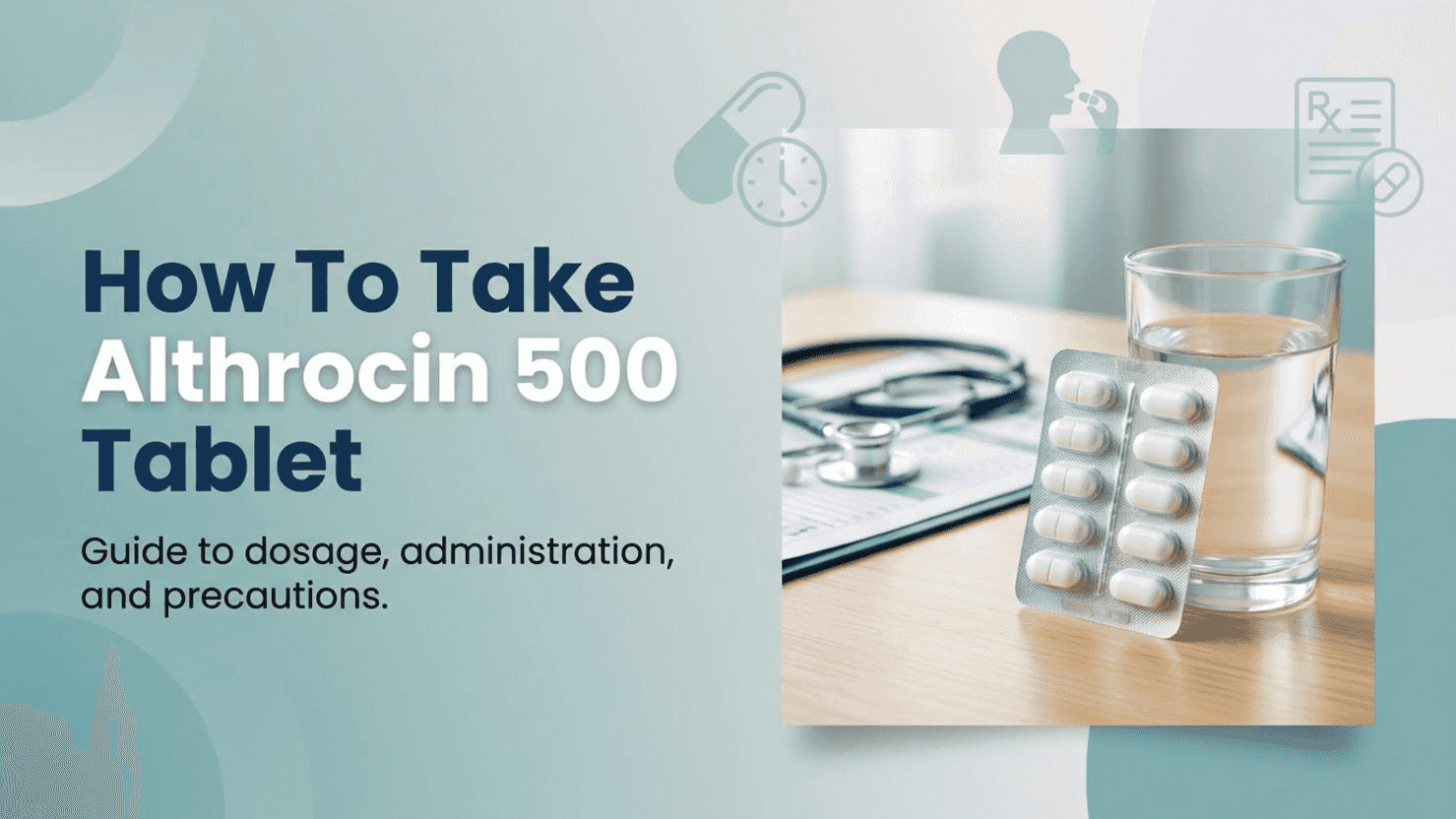
Are you wondering how to take the Althrocin 500 Tablet properly for the best results? Althrocin 500 Tablet contains Erythromycin (500mg), a widely used antibiotic for treating various bacterial infections. Taking this medicine correctly ensures maximum effectiveness and reduces the risk of side effects and antibiotic resistance. In this guide, we will explain everything you need to know, from dosage instructions to useful safety tips, so you can use this antibiotic confidently and responsibly.
Always take Althrocin 500 Tablet exactly as prescribed by your doctor. The dose, frequency, and duration are set based on your specific infection and health status. Do not change your dose or stop the medication early, even if you start feeling better before finishing the entire course, as this can result in incomplete treatment and resistant bacteria.
Swallow each tablet whole with a full glass of water. This helps the tablet dissolve efficiently in your stomach and reduces the risk of irritation. Do not crush or chew the tablet, as this could increase the risk of side effects or make the medicine less effective.
For best absorption, Althrocin 500 Tablet should generally be taken on an empty stomach, usually at least 30 minutes before or 2 hours after a meal. Food may decrease the effectiveness of erythromycin, so following this timing can help your body make the most of the medication.
Try to take your tablet at the same times every day. This routine helps maintain consistent levels of the medicine in your body, making it more effective and easier to remember your doses. If you have trouble remembering, setting a daily alarm or reminder can be helpful.
If you miss a dose of Althrocin 500 Tablet, take it as soon as you remember, unless it is almost time for your next scheduled dose. In such a case, skip the missed dose and continue with your regular dosing schedule. Do not take two doses at once to make up for a missed one. Taking extra medicine may increase your risk of side effects without improving your recovery. Always contact your healthcare provider if you are unsure what to do after missing a dose.
The best time to take Althrocin 500 Tablet is usually 30 minutes before meals or at least 2 hours after eating, allowing your body to absorb the medicine properly. Taking it on an empty stomach is important for effectiveness, as food can interfere with erythromycin absorption. However, if you experience stomach upset, consult your doctor—they may advise you to take the medicine with a small snack. Always follow your healthcare professional’s recommendations regarding timing.
The duration for which you should take Althrocin 500 Tablet depends on the type and severity of infection, as well as your doctor's guidance. Even if you start feeling better after a few days, it is essential to complete the entire prescribed course. Stopping early can cause the infection to return or lead to antibiotic resistance, making future infections harder to treat. If you have any doubts about how long to continue, consult your healthcare provider for specific instructions.
Tell your doctor about every medicine, supplement, or herbal product you are using, as Althrocin 500 Tablet can interact with many drugs. Some combinations can increase the risk of side effects or reduce the effectiveness of antibiotics. This information will help your doctor adjust your dose or change medications if needed for your safety.
If you notice signs of an allergic reaction, such as rash, swelling, severe dizziness, or difficulty breathing, stop taking the medicine and seek medical help right away. Allergic reactions to antibiotics are rare but serious and require immediate attention to prevent complications.
Some antibiotics can make your skin more sensitive to sunlight, increasing your risk of sunburn. While taking Althrocin 500 Tablet, try to avoid direct sunlight for long periods, use sunscreen, and wear protective clothing. This simple measure can help prevent unwanted skin reactions during your course of treatment.
Keep Althrocin 500 Tablet in a cool, dry place away from direct sunlight and moisture, and out of reach of children and pets. Proper storage ensures that the medicine remains effective until its expiry date and prevents accidental ingestion by others in your household.
Do not share your Althrocin 500 Tablet with anyone, even if they have similar symptoms. Antibiotics should always be taken only as prescribed, to avoid the risk of improper use, resistance, or allergic reactions. Remind your friends and family to consult their own doctor for medical guidance.
Taking Althrocin 500 Tablet correctly is important for effectively treating bacterial infections and minimizing side effects and resistance risks. Always follow your doctor’s instructions, complete the full course, and seek medical guidance if you have any concerns or develop side effects. For more tips and health resources, don't forget to explore our Blog for reliable information.
Althrocin 500 Tablet is an antibiotic used to treat various bacterial infections, such as respiratory tract infections, skin infections, and certain sexually transmitted diseases. It works by stopping the growth of bacteria, helping your body recover from the infection.
It is generally recommended to take Althrocin 500 Tablet on an empty stomach—at least 30 minutes before or 2 hours after a meal—for better absorption. If you experience stomach upset, consult your doctor for guidance on whether it’s safe to take it with a small snack.
If you notice side effects like stomach pain, nausea, vomiting, or diarrhea, inform your doctor. If you develop severe or allergic reactions, such as rash, swelling, or difficulty breathing, stop the medicine immediately and seek urgent medical attention.
It is generally best to avoid alcohol while taking Althrocin 500 Tablet, as it may increase side effects such as stomach irritation or dizziness. Ask your doctor for specific advice about alcohol use during your course of treatment.
No, you should finish your entire prescribed course of Althrocin 500 Tablet even if you feel better. Stopping early can result in the infection returning or promote the development of antibiotic-resistant bacteria.
Disclaimer: This article is intended for informational purposes only and should not be considered a substitute for professional medical advice. Always consult a qualified healthcare provider for diagnosis and treatment of any health condition.
Our Services
Knowledge Base
Fetured Categories
© 2026 DawaaDost. All rights reserved. In compliance with Drugs and Cosmetics Act, 1940 and Drugs and Cosmetics Rules, 1945, we don't process requests for Schedule X and other habit forming drugs.